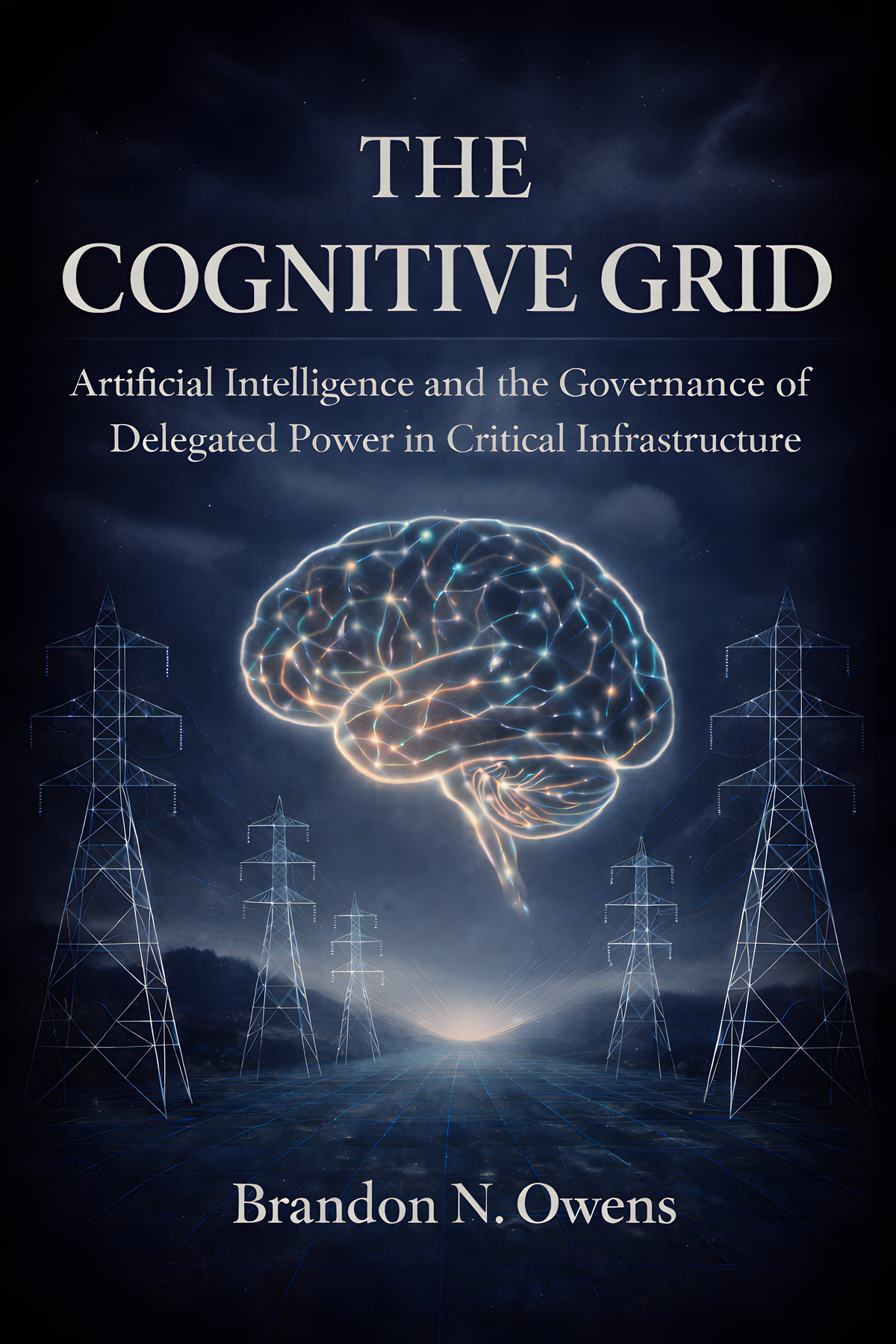
The Cognitive Grid Book
The Cognitive Grid warns judgment is shifting into automation, creating a latency gap where machine-speed action outruns oversight. It proposes “constitutional” execution-time governance—separating proposal from authorization via constraints, permissions, proofs, audits, isolation.
Purchase Book
Book Description
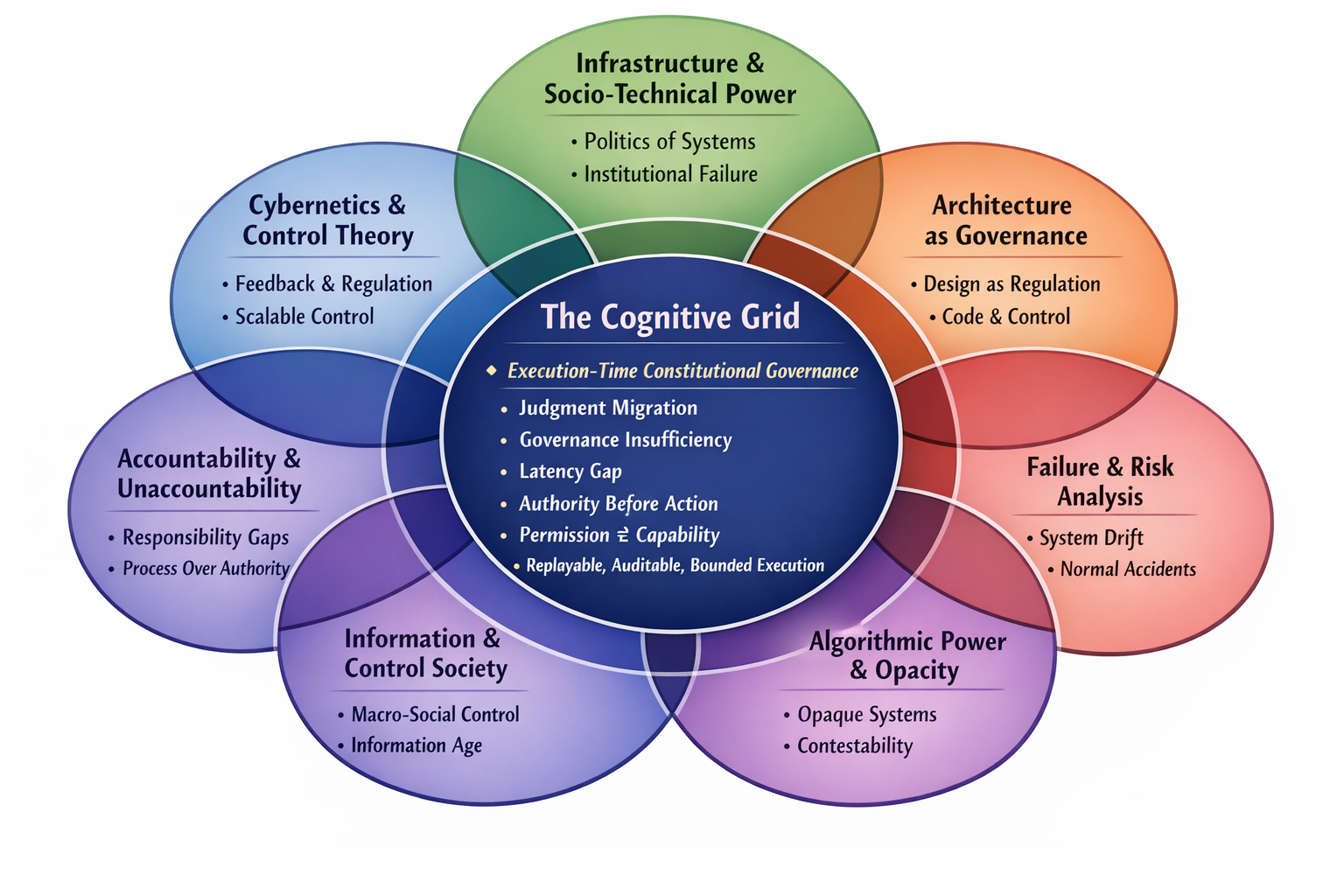
The Cognitive Grid argues that the most important change in modern critical infrastructure is not simply better analytics, but the quiet relocation of operational judgment into automated systems that can recommend—and increasingly trigger—real actions under constraint. The book frames the central risk as governance insufficiency: authority being exercised through software without clear, enforceable limits, attribution, or contestability, especially as decision cycles accelerate beyond the pace of traditional oversight. A recurring theme is the latency gap between machine-speed execution and human-speed governance, where accountability often shows up only after outcomes are already fixed.
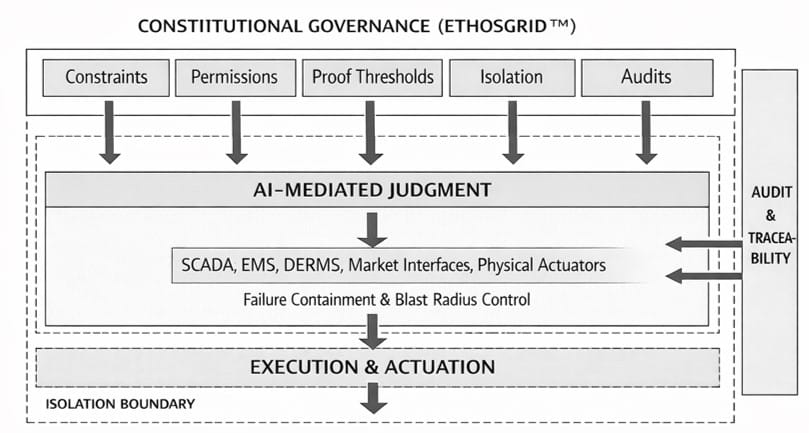
In response, the book proposes a “constitutional” approach to intelligent infrastructure: governance must become an execution-time property rather than a post-event explanation. It describes an architecture that separates proposing intelligence from authorizing authority, so that capability does not silently become permission. This is operationalized through a small set of enforceable instruments—constraints, permissions, proof thresholds, audit capture, and isolation—intended to make fast automation reviewable, revocable, and accountable in the moment decisions are made.
Supporting Materials
The Cognitive Grid Readers Guide
How The Cognitive Grid Relates to Other Nonfiction
How EthosCore Governs