AIxEnergy Journal publishes books for readers who want to understand the machinery beneath the energy transition: the technologies, institutions, markets, and control systems reshaping modern infrastructure.
These works move beyond headlines and technological hype. They trace the long development of energy systems from mechanical machines and industrial networks to software-mediated control, artificial intelligence, and the governance questions now emerging inside the grid.
Together, they tell a larger story. Energy infrastructure is no longer defined only by steel, fuel, turbines, and wires. It is increasingly shaped by data, software, markets, and the institutions that determine how these systems are designed, operated, and held accountable.
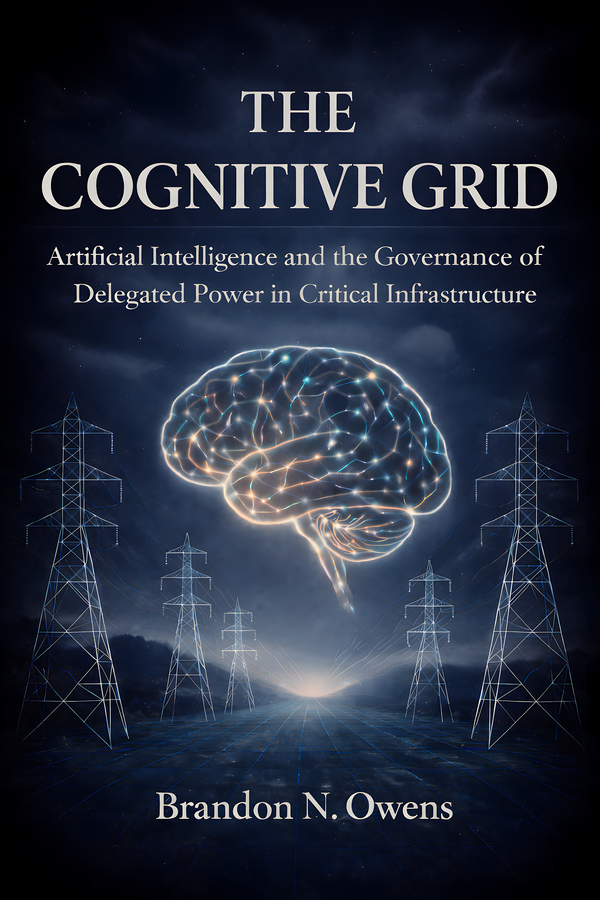
The Cognitive Grid
Artificial Intelligence, Critical Infrastructure, and the Quiet Relocation of Authority into Software
Artificial intelligence is moving from the edge of the energy system into its operating core.
It now supports load forecasting, asset optimization, anomaly detection, distributed-energy coordination, market analysis, and infrastructure planning. These capabilities may improve speed, efficiency, and situational awareness, but they also raise a more consequential question: when software begins to shape operational judgment, where does authority actually reside?
The Cognitive Grid examines the gradual relocation of judgment and authority into software. It explores how AI changes the governance of critical infrastructure, why recommendations can become decisions in practice, and how institutions must adapt when machine intelligence begins to influence systems on which society depends continuously.
This is a book about electricity, artificial intelligence, and accountability. It is also a book about the next phase of infrastructure governance.
The Wind Power Story
A Century of Innovation that Reshaped the Global Energy Landscape
Before wind power became one of the world’s most important clean-energy technologies, it was an uncertain experiment.
Its rise was shaped by inventors, engineers, utilities, policymakers, entrepreneurs, oil shocks, research laboratories, public subsidies, industrial strategy, and the persistent improvement of machines operating in difficult environments. What began as a scattered set of experiments became a global industry capable of changing power markets, manufacturing systems, and national energy strategies.
The Wind Power Story traces that century-long transformation. It follows the people, technologies, companies, and policy choices that carried wind energy from the margins of the electricity system into the mainstream of global power generation.
The book shows that energy transitions are rarely sudden breaks from the past. They are built over decades through experimentation, failure, institutional learning, and the gradual alignment of technology, markets, capital, and public purpose.