Global View
Global view of AI and energy: how data center buildouts in the U.S., Europe and Asia are reshaping power markets, investment and grid policy.
China’s Tungsten Controls Expose a Semiconductor Chokepoint
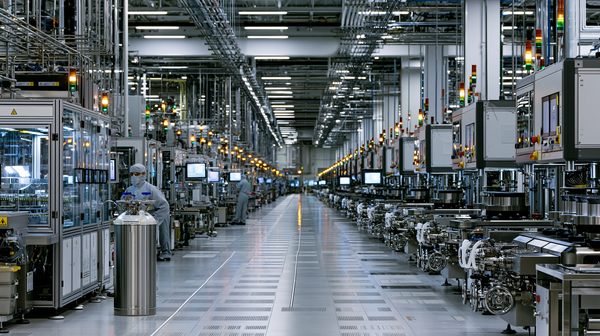
WF6, a critical semiconductor gas, remains available despite reports of Japanese production exits. Yet China-linked tungsten feedstock controls, price spikes, concentrated supply, and 18–24-month qualification cycles expose a deeper bottleneck AI-driven chip demand cannot quickly solve.

Morgan Bazilian

The New Geography of AI Infrastructure
AI is making computation physical again: global AI capacity will follow not just chips and fiber, but power, water, cooling, permits, grid reliability, and the emerging Shadow Grid that turns energy infrastructure into the new map of AI advantage.

Brandon N. Owens


Command of the Interconnect: The Hidden Infrastructure War Beneath Artificial Intelligence
AI’s future may hinge on an obscure material few policymakers recognize: indium phosphide, which powers the optical interconnects linking massive AI chip clusters. As China tightens export controls, the U.S. faces a strategic chokepoint in the physical infrastructure underlying AI dominance.
Morgan Bazilian
The AI Wars: An Electricity Arms Race Between Superpowers
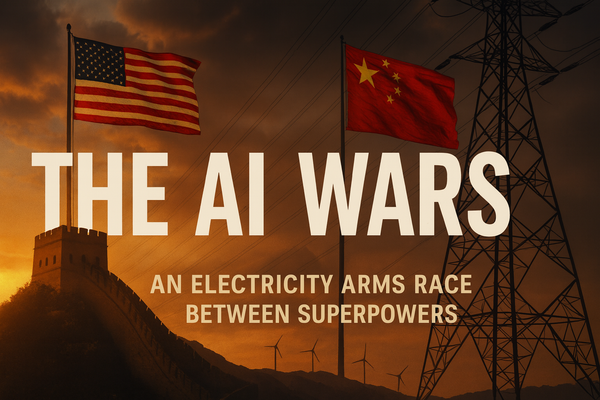
By 2030, AI data centers could consume 945 TWh—more than Japan uses today. The U.S. faces grid strain as AI drives demand toward 50 GW by 2028, while China aligns energy, chips, and propaganda under state policy. The real AI war is over electrons, narrative, and infrastructure supremacy.
Brandon N. Owens
How Electricity Became the Hidden Frontline in the U.S.–China AI Rivalry
The AI conversation has long centered on algorithms, data, and hardware—but beneath every inference lies a more vital dimension: electricity. The key question isn’t just whose code is smartest—but whose power stays on.
Brandon N. Owens