
Business & Finance
Places AI and energy within a broader business frame: geopolitics, state competition, national policy, innovation, technology adoption, corporate strategy, and global energy outlooks. These articles connect near-term infrastructure constraints to long-term shifts in power, competitiveness, and industrial capacity.


The AI Boom Is Becoming a Credit Bet
AI financing has progressed from concentrated venture equity into a cross-asset financing system, while the market signals required to validate the buildout—utilization, cash generation, debt absorption and physical energization—remain unresolved.

Morgan Bazilian


The AI-Energy Decision Stack
Infrastructure planning once focused on forecasting demand. AI changes the challenge. The critical question is no longer how much demand will emerge, but which infrastructure commitments should be made before demand is fully known—and who bears the risk if assumptions prove wrong.

Brandon Owens
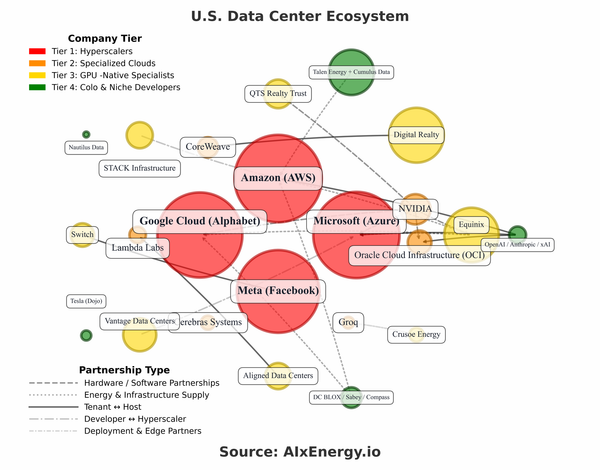
The New Deal: How Hyperscalers’ Partnership Models Are Rewiring Clean-Power Procurement
Hyperscalers are shifting from power buyers to grid architects. Through five partnership models they shape clean energy procurement and grid build-out—deciding whether AI demand locks in fossil fuels or accelerates zero-carbon supply.
Brandon Owens

The Prompt Box Is Part of the Energy System: Why Sustainable AI Is Not Just a Data Center Problem
AI’s environmental impact depends not only on data centers, chips, and power supply, but on how people use it. Sustainable AI requires purposeful prompting, right-sized models, less low-value output, and better “demand architecture” for computation.

Ian Todreas

The AI Factory? Artificial Intelligence, Manufacturing, and the Energy Realities of Reindustrialization
AI is reshaping U.S. manufacturing into a data-driven, energy-intensive ecosystem. Reindustrialization hinges on reliable, low-carbon power and grid modernization—linking America’s industrial competitiveness to its energy infrastructure.
Brandon Owens

Leapfrogged by the Future: AI and the Fragile Moats of Energy Innovation
AI is reshaping energy: grids once built in decades now leapfrog with models, agents, and twins. Speed brings opportunity but erodes moats—durability now lies in adaptability, governance, and momentum. The grid is becoming a cognitive system, raising urgent questions of ownership and control.
Brandon Owens