The White House AI framework accelerates infrastructure at unprecedented speed—but exposes 10 systemic risks, from rising grid fragmentation and cost shifting to reliability, market and governance gaps, as a “Shadow Grid” emerges outside traditional oversight.
Brandon Owens
The grid is shifting from hardware-based control to software-defined systems. AI, electrification, and distributed energy are driving this change, introducing new risks and requiring integrated, adaptive control across sensing, communication, and computation layers.
Brandon Owens
AI data centers are driving a surge in electricity demand and spawning a “shadow grid” of private power plants. Built outside traditional planning, this hidden infrastructure erodes visibility over the energy system and creates new challenges for governance and reliability.
Brandon Owens
Explore our archive of articles, interviews, and creative projects

AI is spreading across electric utilities, but most projects stall. The problem isn’t the algorithms—it’s the data. Grid systems operate on different clocks, from milliseconds to days. Until utilities build time-synchronized data architectures, AI will remain experimental rather than operational.
Brandon Owens
AI is reshaping energy companies by embedding prediction into infrastructure operations. A five-part blueprint guides transformation: identify where AI creates value, build unified data architecture, manage AI as a portfolio, govern model risk, and develop strategic technology ecosystems.
Brandon Owens
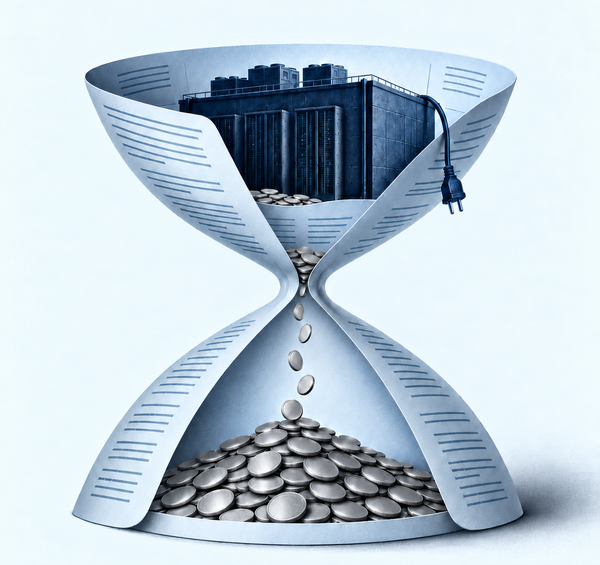
AI companies pledged at the White House to finance power for data centers to protect ratepayers. But AI’s massive electricity demand is reshaping grid architecture—driving new generation, transmission, and private “shadow grid” systems that could shift energy infrastructure costs across the economy.
Brandon Owens
State and federal policies are opening regulatory seams that let large AI data centers build off-grid power, often gas-fueled, outside traditional utility oversight. Clean-energy mandates bind the grid, not private systems—creating a parallel “shadow grid” with emissions and ratepayer risk.
Brandon Owens