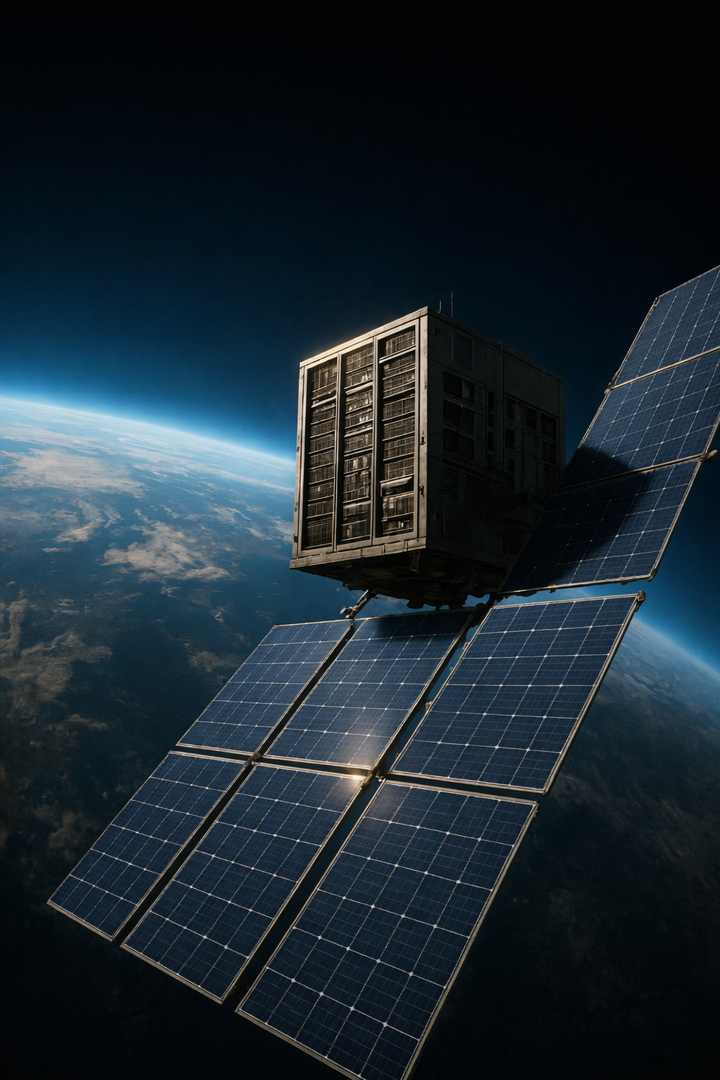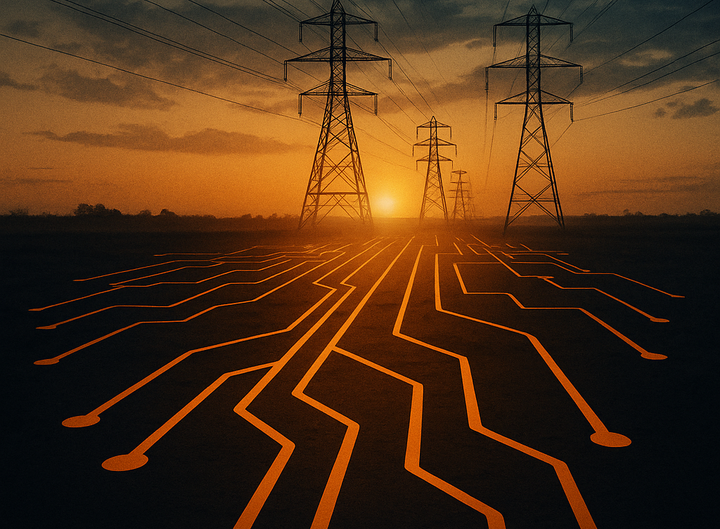
Data centers, once bound to diesel backup, are shifting toward flexibility—using orchestration, batteries, geo-distribution, and hydrogen to align workloads with grids. Reliability is being redefined: from redundancy built on combustion to responsiveness built on optionality.
The modern data center is no longer a warehouse full of servers. It has become the industrial cathedral of the twenty-first century, a humming sanctuary where digital civilization conducts its daily rites. Every payment, every search query, every training batch for the artificial intelligences now reshaping the global economy passes through these luminous vaults. And with each cycle of computation, the world’s appetite for electricity grows.
By 2030, global data centers could absorb nearly ten percent of total electricity generation—an electrical footprint large enough to rival today’s industrial economies. For decades, this escalating load rested atop a simple but carbon-intensive axiom: reliability meant redundancy, and redundancy meant diesel. Fleets of fossil generators became the silent custodians of uptime, ensuring that the lights of the digital world never dimmed.
That orthodoxy is breaking.
What is emerging in its place is a new paradigm—one defined not by oversized engines and mechanical fortresses but by orchestration, mobility, and real-time awareness. The flexible data center is arriving, and with it, a structural shift in the relationship between energy and information.
 Brandon Owens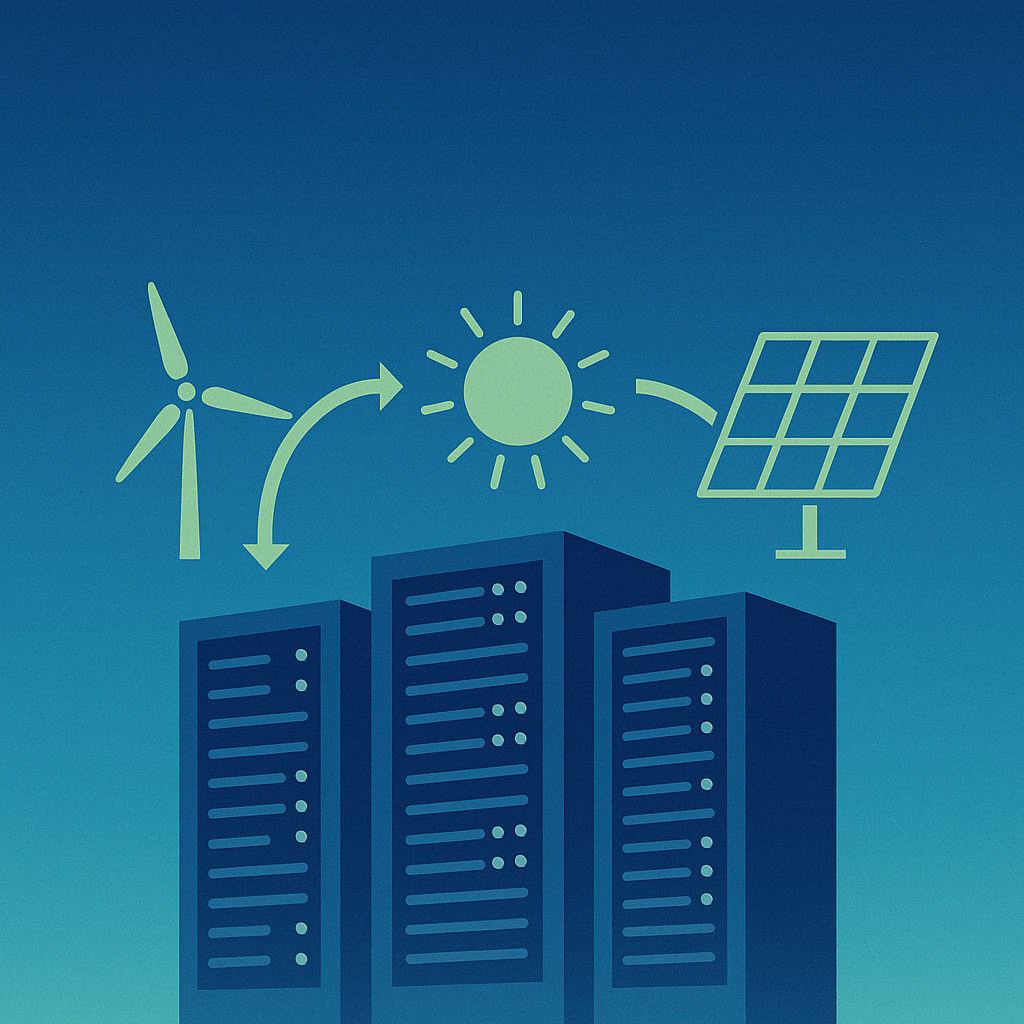
The Diesel Covenant
To understand how we reached this pivot, one must revisit the cultural inheritance of modern computing. In the blackouts of the 1960s and 1970s, the grid revealed its fragility. The lesson etched into the industry’s memory was stark: trust nothing outside your walls. As computing expanded and the stakes of downtime grew, architects turned to diesel. By the 1990s, Tier certifications formalized a worldview that equated reliability with mechanical redundancy. Contracts codified it, banks financed it, insurers demanded it, and regulators deferred to it.
The result was a self-reinforcing ecosystem where diesel became not merely a tool, but a doctrine.
The Flexibility Frontier
The story begins to shift when we acknowledge a structural truth: not all workloads are created equal.
Payments, emergency calls, and real-time streaming demand inelastic performance. They cannot be paused without consequence. But vast swaths of digital work—from rendering farms, to batch analytics, to the enormous training cycles behind artificial intelligence—can move. They can wait. They can migrate. And they can flex.
Over the past three years, Google and Microsoft have quietly demonstrated this principle at scale. Their early experiments in carbon-aware computing show that workloads can be shifted across hours or continents based on real-time signals: emissions intensity, wholesale prices, grid congestion, or renewable availability. What once looked like a monolith appears increasingly as a fluid system.
Responsiveness, not redundancy, becomes the measure of reliability.
Technologies That Make Flexibility Real
A new technical stack is solidifying—an architecture that turns optionality into engineering practice.
Kubernetes and other container orchestration engines have transformed workloads into mobile assets, capable of being paused, packaged, and redeployed in near-real time. Virtualization and telemetry platforms monitor grid conditions, forecast demand, and automate rescheduling. Geo-distributed networks route computation across time zones, enabling workloads to “follow the sun” and match renewable output.
Meanwhile, the hardware foundation is evolving. Multi-hour battery storage—powered by lithium iron phosphate, sodium-ion chemistries, and emerging flow systems—is challenging diesel’s monopoly on backup. Hydrogen fuel cells offer zero-emission firm capacity for critical environments. Hybrid systems blend batteries, fuel cells, and smart load management into an integrated platform that can support both the grid and the data center simultaneously.
Collectively, these technologies erode the generator wall. They redefine what it means for a data center to be reliable.
Institutionalizing Flexibility
Yet flexibility will not reshape the energy system unless it becomes more than a pilot project.
Across the United States, Europe, and Asia, the first signs of institutionalization are appearing. Regulators are embedding flexibility requirements into siting and licensing regimes. Utilities are incorporating flexible loads into resource adequacy planning. Hyperscalers are signing structured demand-response agreements that align their operations with system needs. Procurement teams are beginning to specify firm clean capacity rather than simply diesel redundancy.
The fortress model is yielding to a network model—one that treats the cloud as part of the grid, not a client perched above it.
The Long Arc: Energy Meets Information
The implications reach far beyond data centers.
Institutionalized flexibility reduces reliance on fossil peaker plants and amplifies the value of renewables. It reshapes investment decisions, directing new capacity toward regions with dynamic market structures and strong clean-energy penetration. It forces new questions of political economy, as hyperscalers gain influence in grid operations. And it demands a cultural shift, recognizing that digital infrastructure is now inseparable from energy governance.
In this emerging world, the cloud is not merely a consumer of electricity. It is a participant in the energy system—a computational actor capable of supporting stability and accelerating decarbonization.
The Reframing of Reliability
The conclusion is unmistakable.
Data centers never inherently “needed” fossil generation. What they required was reliability. And reliability, as it turns out, can be designed through optionality: workloads that shift, batteries that buffer, hydrogen that sustains, orchestration engines that align digital pulses with physical flows of power.
The architecture of the future will not be walled gardens of diesel engines. It will be adaptive, distributed, and synchronized with the grid it depends upon.
Flexibility is no longer an experiment. It is the new baseline.
The age of flexibility has begun.