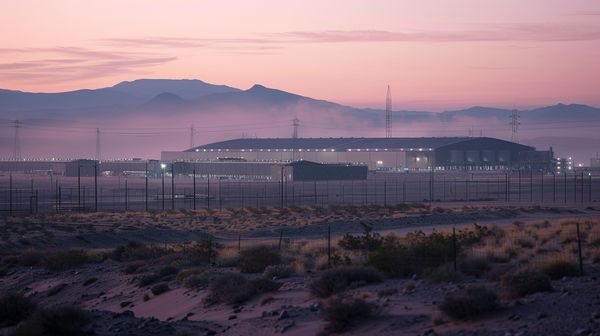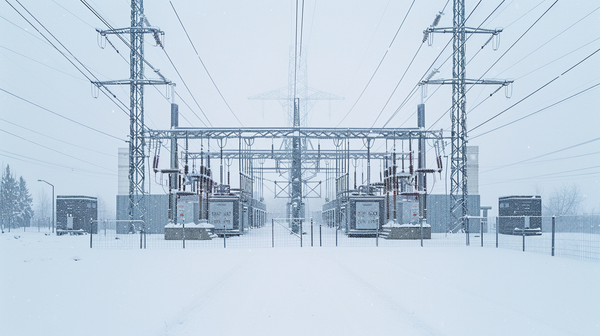
The International Energy Agency’s World Energy Outlook 2025 reads like a dispatch from a grid that is being quietly rewritten by code. The report was conceived as a global energy survey, but buried in its tables and scenario charts is something more specific: the first full attempt by a major institution to quantify what the rise of artificial intelligence and data centres will do to electricity systems, fuels, and investment over the next decade and beyond.
For AIxEnergy, this is home turf. What follows is a fully WEO-aligned re-telling of that story: how much power AI is likely to consume, where the demand will land, what fuels will be pulled into service, and how AI itself pushes back against the very energy pressures it creates. Every number and factual claim below is drawn directly from World Energy Outlook 2025 unless otherwise noted, and citations are provided inline.
From oil shocks to inference shocks
The WEO was born in the aftermath of the 1970s oil crises, when barrels and tankers defined energy security. In 2025, the report opens on a different landscape: energy is still geopolitical, but the points of vulnerability now stretch from oil and gas fields to critical minerals, transmission grids, and the neural racks of hyperscale data centres.
The IEA is explicit that we are entering an “Age of Electricity,” in which electricity demand grows much faster than total energy use. In both its Current Policies Scenario (CPS) and Stated Policies Scenario (STEPS), global electricity demand rises by about 40 percent between 2024 and 2035, to roughly 37,800 terawatt-hours, while overall energy demand grows more slowly. Within that expansion, AI and data centres are not the largest driver, but they are among the fastest and most concentrated. They are also the least negotiable: unlike home air conditioners or industrial motors, a modern AI cluster cannot simply be “turned down” in the middle of a training run.
The $580 billion pivot: when data overtakes oil
The hinge of the AI story in WEO 2025 is not a single gigawatt figure but a pair of investment numbers. In 2025, the IEA estimates that global investment in data centres reaches around 580 billion United States dollars, surpassing the roughly 540 billion dollars projected for global oil supply investment in the same year.
This crossover is more than symbolism. For half a century, upstream oil spending was one of the main barometers of energy security and macroeconomic risk. The IEA’s comparison signals a structural shift: capital is increasingly flowing into digital infrastructure that sits electrically “downstream” of generation, yet has the power to reshape generation itself. In the AIxEnergy frame, this is the moment when electricity stops being just the fuel for computation and becomes the constraint that defines how fast intelligence can scale.
How much power AI actually uses
The WEO’s quantitative core on AI sits in section 1.5, “How much difference will AI make to the future of energy?” There, the IEA does two important things at once: it resists sensationalism while acknowledging the scale of the shift.
On the demand side, the agency projects that electricity consumption by AI-optimised servers increases fivefold by 2030 as data centre capacity surges. This surge in AI-tuned hardware is enough to double total data-centre electricity consumption by 2030 relative to 2024.
Yet even after this doubling, data centres as a whole account for less than 10 percent of global electricity demand growth between 2024 and 2030 in the STEPS. Other sources—industrial loads, electric vehicles, air conditioning, and other end-uses—still dominate the incremental growth of electricity demand.
Looking out to 2035, the Executive Summary crystallises the story: electricity consumed by data centres roughly triples by that date, but still represents under 10 percent of total global electricity demand growth across the period. In other words, AI is important not because it is the main driver of global load, but because it is a fast-growing, highly concentrated sliver that arrives precisely where grids are already taut.
Geography: three regions, one bottlenecked grid
The WEO is unusually clear about the spatial pattern of this demand. Data centres today are geographically concentrated, with the United States, China, and Europe accounting for about 82 percent of global capacity. Over the next few years, more than 85 percent of new capacity additions are expected in these same three regions.
In China and the European Union, data centres account for an estimated 6 to 10 percent of electricity demand growth to 2030. In the United States—the world’s largest data-centre market—they are far more dominant, accounting for around half of electricity demand growth over the same period.
A geospatial analysis in the report adds further texture. More than half of data centres under construction or announced are being developed in or near cities of at least one million people, where grids already serve large loads. About 55 percent of the new centres in the pipeline are larger than 200 megawatts; once fully online, each of those facilities will consume as much electricity annually as roughly 200,000 households. Nearly two-thirds of future capacity is sited in existing data-centre clusters rather than new greenfield locations.
The result is a kind of digital urbanism that rides atop twentieth-century grid topology. Load arrives not as a diffuse swell but in discrete, multi-hundred-megawatt chunks at the edges of metropolitan substations whose transformers and rights-of-way were never designed with AI in mind.
Queues, delays, and the new face of “speed to power”
By the time we reach the middle of chapter 1, the WEO turns from demand to friction. Grid congestion and connection queues for new data centres are already lengthening in many regions. In the United States, connection times are typically in the range of one to three years, but in northern Virginia—the densest data-centre cluster on Earth—they can stretch to seven years.
Europe is not immune. In the United Kingdom and parts of continental Europe, average queue times have been reported at seven to ten years. In Dublin, a major European data-centre hub, new connection requests have been paused until 2028. Supply chains for key equipment—transformers, cables, gas turbines, and the critical minerals embedded in them—are already under pressure. Taking these bottlenecks together, the IEA estimates that about 20 percent of projected data-centre additions to 2030 could be at risk of delay.
For AIxEnergy, this is the core strategic constraint. The limiting factor is no longer the willingness of capital to build compute, but the ability of physical infrastructure to deliver electrons to it. “Speed to power,” in the WEO’s language, becomes the determining variable for how fast AI capacity can scale, especially in the United States and Europe.
Where the extra electricity comes from
On the supply side, the report asks a straightforward question: if data centres are going to double or triple their electricity use, which technologies actually provide that incremental power?
In the STEPS, renewables remain the leading source of additional electricity for data centres. Between now and 2035, they provide around 45 percent of the growth in electricity consumed by these facilities, equivalent to nearly 400 terawatt-hours of extra renewable output dedicated to data-centre load. In the more conservative CPS, renewables still contribute the largest share of incremental supply, though their share falls modestly to about 40 percent.
Natural gas also plays a critical role, particularly in the United States and the Middle East. Globally, gas-fired generation serving data-centre demand increases by about 220 terawatt-hours to 2035 in the STEPS and by roughly 285 terawatt-hours in the CPS. This growth comes despite a surge in orders for new gas turbines over the past two years, which has strained supply chains and lengthened delivery times and costs.
Nuclear power emerges as a third, quieter pillar. With renewed policy support and rising interest from technology companies, nuclear plants—both existing reactors and new designs such as small modular reactors—are increasingly being positioned as dedicated power sources for data centres. The WEO notes that in the STEPS, nuclear provides around 190 terawatt-hours of additional electricity for data centres by 2035, and records the first power-purchase agreement between a data-centre operator and a demonstration-scale small modular reactor.
In the AIxEnergy language, the pattern is clear: renewables set the direction of travel, gas provides much of the dispatchable flexibility, and nuclear offers long-duration, zero-carbon baseload for hyperscale clusters that cannot tolerate volatility.
AI as a demand shock—and an efficiency engine
The WEO is careful not to treat AI solely as a source of new load. Section 1.5.3, “AI for energy,” turns the lens around and asks what AI does inside the energy system itself.
Here, the IEA’s modelling suggests that widespread uptake of AI-enabled solutions across the energy sector—optimised logistics in oil and gas, predictive maintenance in power plants and grids, smarter control of industrial processes and mobility—could boost efficiency by roughly 3 to 10 percent across the transport and industry sectors globally by 2035. The aggregate energy savings from this optimisation are on the order of 13.5 exajoules, slightly larger than the total energy demand of Indonesia today.
This is the paradox at the heart of AIxEnergy. The same compute that drives new power demand can, if appropriately governed, reduce the amount of primary energy required to deliver a given level of economic output. In macro terms, AI is both a demand accelerator and a potential brake—an inference engine that, in principle, can help the grid think its way into a more efficient configuration.
Risk hierarchy: from critical minerals to climate overshoot
The AI story in WEO 2025 also sits within a broader risk hierarchy. The report spends significant attention on critical minerals, noting that a single country is the dominant refiner for nineteen out of twenty strategic energy-related minerals, with an average market share of about seventy percent. Many of those minerals feed directly into the equipment that will serve AI loads—grid transformers, power electronics, batteries, and the chips that sit on AI accelerator boards.
At the same time, the IEA is blunt about climate trajectories. In the STEPS, energy-related carbon dioxide emissions fall below 30 gigatonnes by mid-century, but still leave the world on a path toward roughly 2.5 degrees Celsius of warming by 2100. In the CPS, emissions remain higher and are broadly consistent with almost 3 degrees of warming. In the Net Zero Emissions by 2050 (NZE) Scenario, the 1.5-degree threshold is overshot for several decades before being re-approached late in the century via deep decarbonisation and large-scale carbon-dioxide removal.
AI, in the WEO framing, does not rescue us from these trajectories by itself. It intensifies pressure on the grid in the near term and offers tools for mitigation and efficiency, but the decisive variables remain policies, investment patterns, and the speed at which low-emissions technologies are built out and integrated.
What this means for AIxEnergy
When the IEA writes that “explosive growth in electricity demand for data centres and AI is concentrated in advanced economies and China,” it is summarising a story that is both reassuring and alarming. Reassuring, because even in the central scenarios, AI does not blow up the global power system; its share of incremental electricity demand remains under 10 percent. Alarming, because that relatively small share is focused in specific corridors—Northern Virginia, Dublin, the Rhine-Ruhr, coastal China—precisely where grids are already strained, land is contested, and queues are stretching from years toward decades.
For AIxEnergy, the implications are clear:
First, the centre of gravity of AI-driven electricity demand is the United States, China, and the European Union, with the United States in particular seeing data centres account for about half of projected electricity demand growth to 2030 in the STEPS. Any serious “speed to power” strategy must therefore start with these regions’ permitting, interconnection, and grid-planning regimes.
Second, the composition of the marginal kilowatt-hour for data centres will be set by the interplay of renewables buildout, gas-turbine availability, and the politics of nuclear restarts and SMR deployment. Renewables are on track to supply roughly 40 to 45 percent of additional data-centre demand by 2035; gas and nuclear fill most of the rest. The carbon intensity of AI will follow.
Third, AI itself is a lever. A 3 to 10 percent efficiency gain across global transport and industry, corresponding to about 13.5 exajoules of avoided energy demand, is not a rounding error; it is an entire Indonesia’s worth of energy carved out of the system. Whether that potential is realised depends on governance, incentives, and the degree to which AI tools are aimed at optimisation rather than pure scale.
Finally, the WEO reminds us that while AI is the most novel of the new energy loads, it is not the only one. The same scenarios that double or triple data-centre demand also see rising electricity use for cooling, vehicles, and advanced manufacturing. The AI question, in other words, is not “Will the grid survive?” but “Who will get to plug in, on what terms, and at whose expense?”
Those are the questions AIxEnergy was built to interrogate. The World Energy Outlook 2025 does not close the debate; it gives us the most rigorous, globally consistent baseline yet for understanding the energy economics of AI. From here, the task is to translate those scenario curves into investment decisions, regulatory frameworks, and governance architectures that keep the intelligence boom aligned with a stable, decarbonising grid.
International Energy Agency. World Energy Outlook 2025. Paris: OECD/IEA, 2025.