On June 18, 2026, the Federal Energy Regulatory Commission launched what may become one of the most consequential electricity market proceedings of the AI era. In a coordinated set of show-cause orders issued under Section 206 of the Federal Power Act, FERC directed all six Regional Transmission Organizations (RTOs) and Independent System Operators (ISOs) under its jurisdiction—and their transmission-owning utilities—to either justify or reform the tariff structures governing how large electricity consumers connect to the transmission system. Data centers, advanced manufacturing facilities, AI compute campuses, and other energy-intensive projects are now at the center of a proceeding that could reshape how the United States integrates large loads into the grid.
The scope of the action is extraordinary. Within 60 days, each RTO and ISO must demonstrate why its existing tariffs remain just and reasonable in the absence of provisions specifically tailored to large-load integration or propose reforms. Within 30 days, each must also explain how it intends to ensure adequate generation will be available to serve both existing customers and the next wave of large electrical loads.
Viewed narrowly, this is a tariff proceeding. Viewed more broadly, it is an institutional response to a structural shift in the American economy. For decades, electricity markets operated under assumptions of gradual demand growth, relatively predictable load forecasts, and a clear separation between generation planning, transmission planning, and customer development. The emergence of AI infrastructure, hyperscale data centers, advanced manufacturing, and other gigawatt-scale loads is challenging those assumptions simultaneously. Projects measured in hundreds or thousands of megawatts are increasingly seeking power on timelines that traditional utility and transmission planning processes were never designed to accommodate.
FERC's orders explicitly build upon the Department of Energy's October 2025 large-load initiative and the Administration's broader emphasis on economic competitiveness, manufacturing expansion, and leadership in artificial intelligence. The Commission repeatedly frames the proceeding around the need for "speed-to-power"—the ability to connect major new loads rapidly while maintaining reliability and protecting consumers.
The five reform categories identified by FERC—interconnection and study processes, cost allocation, co-location and behind-the-meter generation, flexible transmission service, and planning for generation serving large loads—are more than discrete policy issues. Together, they represent an attempt to redesign the interface between the electric grid and a new generation of infrastructure-intensive industries.
That is why this proceeding matters. FERC is not responding simply to data centers. FERC is responding to a governance challenge created by AI-scale infrastructure colliding with institutions, market rules, and planning frameworks designed for a very different era.
The outcomes of this proceeding will influence far more than transmission tariffs. They will help determine how quickly new AI infrastructure can be deployed, who bears the costs of supporting that growth, how flexible loads participate in electricity markets, and whether the U.S. electric system can expand rapidly enough to support the next phase of economic development.
Investors, utilities, regulators, developers, hyperscalers, and policymakers should pay close attention. Years from now, this proceeding may be remembered not as a technical tariff case, but as the moment federal regulators formally acknowledged that artificial intelligence had become an infrastructure challenge as much as a technology challenge.
Why FERC Acted Now
For most of the past two decades, electricity demand growth across the United States was relatively modest and predictable. Wholesale markets, utility planning processes, and transmission study frameworks evolved around that assumption. New industrial facilities certainly appeared, but planners rarely faced simultaneous requests for multiple projects measured in hundreds of megawatts or even gigawatts.
In that world, a new factory, industrial campus, or data center could generally be incorporated into planning horizons that stretched over years rather than months.
That world is changing rapidly. Across the country, utilities and grid operators are confronting an unprecedented wave of proposed data centers, AI compute campuses, advanced manufacturing facilities, and other large electrical loads. Many of these projects are measured not in tens of megawatts but in hundreds or thousands. More importantly, they arrive with development schedules that increasingly reflect the pace of the digital economy rather than the pace of traditional infrastructure planning. In the race to deploy artificial intelligence, access to power has become a strategic constraint, and developers increasingly seek service in months rather than years.
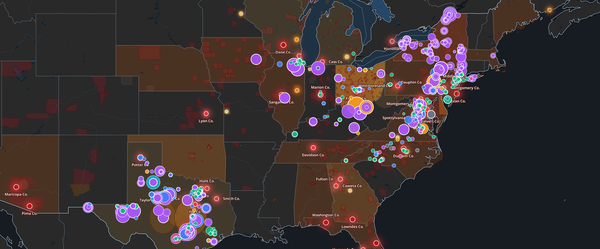
The scale of the challenge is becoming increasingly visible. The International Energy Agency projects U.S. data center electricity consumption rising from approximately 200 TWh in 2022 to roughly 260 TWh by 2026, representing about 6% of total U.S. electricity demand. Globally, the IEA estimates that data center electricity consumption could double by 2026 as AI training, inference, cloud computing, and other digital workloads continue to expand. At the same time, utilities, regional grid operators, and developers are evaluating thousands of megawatts of proposed new load additions. In several regions, resource adequacy concerns, transmission constraints, and interconnection backlogs have become increasingly intertwined with expectations for AI-driven demand growth.
Federal policymakers have been watching closely. On October 23, 2025, Secretary of Energy Chris Wright formally directed FERC to address large-load integration challenges under Section 403 of the Department of Energy Organization Act. The Department's letter emphasized that large loads, including AI data centers, must be able to connect to the transmission system in a timely, orderly, and non-discriminatory manner. The Administration framed the issue not simply as an electricity challenge, but as a question of economic competitiveness, manufacturing expansion, technological leadership, and national security.
FERC's June 2026 action is a direct response to that concern. The Commission explicitly states that its orders advance the Department of Energy's large-load initiative and are intended to deliver the "speed-to-power" necessary to support the innovation economy, strengthen U.S. competitiveness in artificial intelligence, and facilitate the reshoring of advanced manufacturing. This language is notable. FERC is not presenting the proceeding as a narrow tariff dispute. It is framing large-load integration as a strategic economic issue.
Several forces have converged to create this moment: rapidly increasing forecasts for AI-related electricity demand, growing concern about resource adequacy and transmission constraints, pressure from developers seeking faster interconnection timelines, and a broader recognition that existing market structures were not designed for the scale and speed of infrastructure development now emerging.
The Commission's conclusion is clear. The institutional frameworks governing transmission access must evolve. FERC has opened major transmission and market-design proceedings before. What makes this action different is that it focuses directly on the interface between large electricity consumers and the grid itself. Previous proceedings often concentrated on generation markets, transmission planning, reliability standards, or wholesale market design. This proceeding examines how the electric system accommodates a fundamentally new class of infrastructure development: multi-hundred-megawatt and gigawatt-scale loads with unique operational, economic, and reliability characteristics.
For decades, large-load growth was primarily viewed as a local utility planning issue. FERC is now treating it as a national market-design issue. That shift alone makes this one of the most consequential electricity policy developments of the AI era.
FERC’s Five Reform Categories — and What They Mean
The heart of FERC’s orders is that it has identified five categories of reform where current tariffs may be insufficient. At first glance these categories look technical, but they each address a core challenge of modern grid integration. The table below translates FERC’s categories into plain English, highlighting the underlying infrastructure question and strategic context for each.
| FERC Reform Area | Regulatory Question | Underlying Infrastructure Problem | What Success Looks Like | Strategic Implication |
|---|---|---|---|---|
| Transmission Service Applications & Studies | How can large-load interconnection requests be processed much faster without compromising reliability? | Study processes were built for incremental growth, not dozens of gigawatt-class projects simultaneously. | Predictable, accelerated study timelines (e.g. integrated multi-faceted studies, conditional projects) using advanced technologies. | Speed-to-power becomes a competitive advantage. Accelerated projects attract investment. |
| Cost Allocation & Transparency | Who pays for the infrastructure (upgrades) needed by these big new loads? | Risk of cost-shifting: existing customers shouldn’t unknowingly subsidize new data centers or factories. | Clear cost-causation rules and open transparency (developers see which upgrades they trigger, consumers see fairness). | Developers, utilities, and regulators gain certainty on risks. Market confidence is preserved. |
| Co-Location & Behind-the-Meter Generation | How should facilities co-located with their own generators use the grid, and who pays? | Traditional tariffs didn’t anticipate huge loads paired with on-site or nearby generation. | Consistent frameworks (tariff rules) for combined generation+load sites that balance cost, reliability, and fairness. | Enables new “AI campuses” to build on-site power while ensuring the broader grid sees a clear contract arrangement. |
| Flexible Transmission Service | Can RTOs offer large loads something other than straight firm service? | Tariffs assume binary choices (firm or nothing) even though many loads can curtail or be scheduled flexibly. | New products (e.g. curtailable service, firm/nonfirm contract-demand options) that match a load’s flexibility. | Potentially the biggest enabler: leveraging AI’s inherent flexibility (demand response, storage) to relieve grid constraints. |
| Electrically Proximate Generation | How should local generation serving large nearby loads be planned and studied? | Generation and load planning have traditionally been siloed; now they increasingly overlap. | Integrated planning/study processes (like SPP’s HILLGA) that evaluate generation+load as a combined solution. | Accelerates coordinated deployment of generation and large loads, reducing project risk and speeding growth. |
| Resource Adequacy (30-day reports) | Where will the power come from? | Load growth is accelerating faster than most regions are adding supply capacity. | Transparent regional plans for ensuring enough generation and demand response will meet new loads. | Forces each market to publicly confront the supply-side challenge, linking large loads to resource adequacy reforms. |
Viewed together, these reforms hint at a much deeper shift. FERC is not simply trying to give data centers a shortcut; it’s redesigning the rules for how any massive new consumer accesses transmission. The process demands not just tariff text tweaks but rethinking long-standing constructs: How fast can we study a 500 MW load? Can we allow data centers to promise “we’ll take less power under stress”? How do we prevent surprise costs? These have never been core questions for regulators – until now.
The Most Important Reform
Much of the commentary around these orders has focused on co-location (given the high-profile PJM case). That’s understandable – co-location was front-page news. But arguably the most consequential category may be Flexible Transmission Service. Historically, transmission service for large loads has been binary: you either get firm network service or you don’t. The rise of AI changes that assumption. Some AI workloads can be interrupted, deferred, or absorbed by on-site batteries without impairing the business. Some could be shifted in time or location. FERC explicitly calls for “new transmission services for flexible large loads”. If markets create such products (for example, an interim curtailable service or a pay-for-flex option), it could unlock far more capacity. In effect, the grid would gain a new lever: matching its operational limits with customer flexibility. Many industry veterans believe this innovation could prove even more powerful than co-location rules in accelerating big-load integration.
Traditionally, regulators saw power plants and big loads as separate issues. In the AI era, they are intertwined. Large data centers might pause computations during peak stress, or gradually increase load as new lines come online, or even provide grid services via their batteries. Flexible transmission service is the template for this new reality: it treats loads not as static consumers but as active grid resources. If FERC and the RTOs succeed here, the phrase “firm service” might no longer imply always-on in practice – it could mean as-needed. That shift would be profound for grid economics. For that reason, even as everyone debates co-location tariffs, keep an eye on whether ISO/RTO proposals create and price such flexible offerings.
A National Proceeding, Not a PJM Proceeding
Until recently, much of the large-load debate was centered on PJM’s co-location docket. But the June 18 actions are national. FERC directed all major organized markets – PJM, MISO, SPP, CAISO, ISO-NE, NYISO – to address these issues. Moreover, FERC declined to impose a one-size solution. Its news release explicitly notes the six operators are “unique in their individual advancement toward large load innovation … and geography”. The Commission recognizes that what works in CAISO (with its intra-state focus and lack of traditional Order 888 transmission service) may differ from MISO or SPP.
One of the most sophisticated aspects of this proceeding is what FERC chose not to do. It could have tried to dictate uniform rules for data centers across the U.S. Instead, FERC is demanding each RTO explain why its own rules are adequate or propose tailored fixes. This reflects an important reality: Northern Virginia’s grid is very different from the Panhandle. California’s needs differ from New England’s. By preserving regional flexibility and processes, FERC is essentially running six parallel experiments. This should speed learning: some regions may try aggressive reforms (like SPP’s 90-day pathway), while others adapt differently. The outcome could be multiple models for integrating AI-scale loads, from which best practices will emerge.
The proceeding also underscores the vast scope: it covers roughly two-thirds of U.S. electricity demand under FERC’s remit. The six RTOs combined serve over 200 million people. The orders took effect nationwide as soon as issued. Behind the scenes, FERC staff says there are now thousands of megawatts of requests in the queue in these regions, far more than a year ago. All stakeholders – utilities, developers, state regulators – are paying attention because an answer in one region could influence others.
The Resource Adequacy Question
Another crucial element is the requirement that each RTO/ISO submit a generation adequacy report within 30 days. FERC is asking each market to lay out, in detail, how it will ensure enough supply (and demand response) exists to meet the new loads. This reveals something telling: FERC knows that access to wires is one thing, but having enough power to serve rapid demand growth is just as critical. In effect, the Commission is asking: “If 1 GW of data centers plug in, where will its electrons come from?”
This issue has exploded recently. Capacity auctions and planning studies in several regions have already flagged concerns. PJM’s shortfall in Dec 2025 was one wake-up call. The FERC orders effectively demand RTOs update their resource adequacy constructs or add new measures (e.g. contracts, energy offers) to cover the gap. Some markets are already discussing incentives for faster buildout (e.g. land and tax incentives for peaker plants) or even capacity markets specifically for large data center hubs. Within this proceeding, watch for whether any RTO ties its 30-day report to specific proposals – perhaps a call for new capacity markets, or RFPs for distributed generation.
Buried in the rhetoric is a message of calm. FERC repeatedly emphasizes that existing deals and contracts should be respected. For example, Chairman Laura Swett stated FERC must “provide certainty for investors by directing the markets to protect existing deals”. In practical terms, this means FERC is not trying to upend agreements already in place, and it is cautious about retroactive changes that could scare off capital. The orders explicitly carve out transitional relief for near-final agreements. This is an important signal to companies and financiers: the goal is to reduce regulatory risk, not to freeze new construction. FERC wants innovation and growth, but it wants them on a stable footing. Therefore, a key purpose of this exercise is not only to change tariffs, but to reduce uncertainty around tariffs and processes, so that long-term investments in power infrastructure (both supply and load) can proceed with more confidence.
The Shift Underway
The reforms FERC is targeting hint at a broader transformation. For decades, the traditional grid paradigm was shaped by slow, predictable growth: utilities forecast demand, service was firm by default, and transmission was largely a behind-the-scenes engineering issue. In contrast, the emerging AI infrastructure paradigm looks very different. The table below contrasts these worlds:
| Traditional Electricity Paradigm | Emerging AI Infrastructure Paradigm |
|---|---|
| Gradual and predictable load growth | Gigawatt-scale load additions (often in single projects) |
| Utilities drive demand forecasts | Developers (AI and industrial firms) increasingly drive forecasts |
| Firm, non-flexible service as the default | Flexible/interruptible service becomes valuable |
| Generation and load planned separately | Generation and large loads developed together |
| Transmission seen as a utility planning issue | Transmission seen as a competitiveness issue (site selection) |
| Infrastructure follows economic development | Infrastructure increasingly dictates where projects locate |
| Electricity viewed as an operating expense | Electricity treated as a strategic asset |
| Data centers seen simply as large customers | Data centers are platforms (generation, storage, digital functions) |
| Reliability has been the overriding objective | Reliability, speed, flexibility, and economic growth jointly matter |
| The grid merely serves the digital economy | The grid now shapes where digital/infrastructure development occurs |
This table may ultimately explain the proceeding better than any legal filing. FERC’s orders are not just reacting to a temporary data center boom; they are responding to the emergence of a fundamentally different infrastructure environment. The institutions governing electricity were largely built for the world on the left of this table. The world emerging today increasingly looks like the right side. In this new world, a data center isn’t just another load – it’s a potential grid resource or constraint. Recognizing that, FERC’s June 2026 action is one of the clearest acknowledgments yet that the rules of the electric system must evolve to match the demands of 21st-century AI and industrial loads.
Why This Matters for the AI Economy
Most narratives about artificial intelligence focus on chips, algorithms, venture capital, or even cooling systems. The FERC proceeding highlights a less visible but equally critical frontier: electricity markets and infrastructure. In an era where a single AI data center might consume hundreds of megawatts, grid capacity can become a strategic bottleneck or advantage.
- Site Selection: The distance between a facility and transmission capacity affects real estate decisions. A company might locate in Iowa over Virginia if one grid offers faster connection.
- Deployment Speed: Getting power in place quickly can make or break an AI project. A refinery of grid red tape can slow down even the best funding and technology.
- Costs and Contracts: Who pays for transmission lines and substation upgrades will ultimately be passed through to either ratepayers or the projects themselves. Clear rules influence financing terms.
- Reliability: AI workloads could potentially help with grid stability (if curtailed or aggregated), or they could stress the grid if unchecked. Market rules shape these possibilities.
- Competitiveness: Nationally, ease of power access is now framed as a global competitiveness issue. The Biden Administration and Congress have signaled that losing out on AI leadership or advanced manufacturing is as much about grid policies as it is about tech R&D.
In short, electricity is no longer just a back-office cost for the tech sector. It is a strategic asset. And the grid is not merely serving the digital economy; it increasingly dictates how and where the digital economy (and manufacturing) can grow.
The Institutional Race Behind the AI Race
For years, the central question around AI’s rise was: How much electricity will it consume? FERC’s June 2026 proceeding suggests a far deeper question: What new market structures, tariff rules, and planning processes are needed to integrate AI-scale loads into the power system while still keeping lights on for everyone else? That is a more consequential question.
History tells us that the details of grid rule changes often outlast the biggest projects in memory. Few people today recall the largest power plant built in 2000, but everyone remembers Order 888 (which opened transmission access) and Order 2000/RTO formation (which fundamentally reshaped markets). They recall when organized markets and RTOs started, because those were institutional inflection points. If we look back, June 2026 may join that list.
The significance of these orders is not merely that they speed up data center interconnection. It is that they recognize a deeper reality: Artificial intelligence is no longer just software; it is fast becoming a physical infrastructure system. The intersection of AI development and energy infrastructure demands new rules. FERC’s action may well be remembered as the moment when federal energy regulators formally began redesigning the interface between the electric grid and the AI-driven economy. In doing so, they have lit the fuse on the next phase of America’s grid evolution – a phase defined by speed, scale, and strategic electric loads, as much as by silicon.