
Cognitive Grid
Covers the rise of AI as an interpretive and operational layer for the electric system. These articles focus on grid intelligence, operator support, software-defined control, delegated judgment, utility AI fluency, governance, and the transition from automation to cognition.



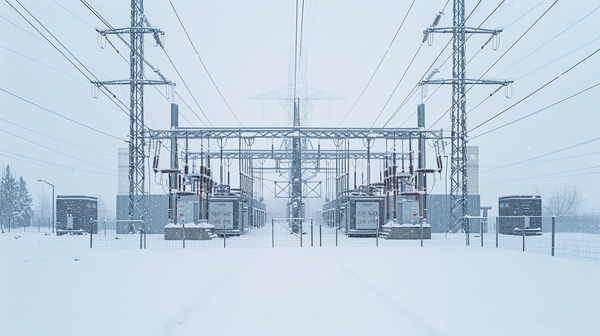
From Automation to Control: Architecting the Software-Defined Grid
The grid is shifting from hardware-based control to software-defined systems. AI, electrification, and distributed energy are driving this change, introducing new risks and requiring integrated, adaptive control across sensing, communication, and computation layers.

Brandon N. Owens

The Architecture Problem Holding Back AI on the Electric Grid
AI is spreading across electric utilities, but most projects stall. The problem isn’t the algorithms—it’s the data. Grid systems operate on different clocks, from milliseconds to days. Until utilities build time-synchronized data architectures, AI will remain experimental rather than operational.
Brandon N. Owens
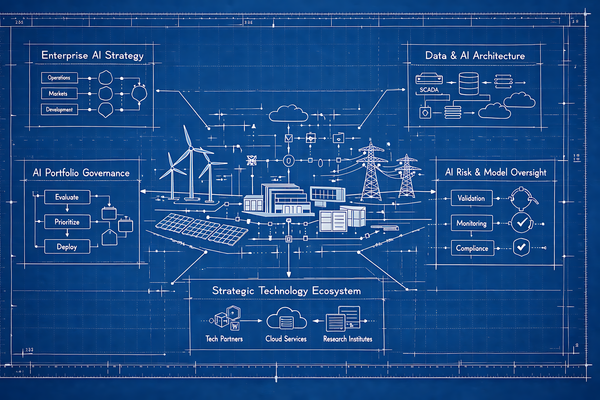
A Blueprint for Enterprise AI Transformation in the Energy Sector
AI is reshaping energy companies by embedding prediction into infrastructure operations. A five-part blueprint guides transformation: identify where AI creates value, build unified data architecture, manage AI as a portfolio, govern model risk, and develop strategic technology ecosystems.
Brandon N. Owens

Extending AI Governance into Grid Governance: A Review of the OECD AI Report from an Infrastructure Systems Perspective
The OECD AI report offers a governance framework for advanced AI, but it is platform-centric. As AI embeds into grid operations and hyperscale load, governance must shift from model oversight to physical consequence—linking compute to megawatts, reliability margins, and ratepayer impact.
Brandon N. Owens