This is the third of a five-part series, hosted by Brandon Owens at AIxEnergy. Part 1 introduced three distinctions (vendor capability versus utility adoption, reliability versus safety, task versus role) and a twelve-row sample of the US electricity workforce. Part 2 developed the four-stage mechanism by which AI capability translates into workforce change in regulated industries and traced it through aviation, freight rail, and maritime. This part builds the full role-by-role inventory across the major positions in the US electricity industry and the institutional infrastructure surrounding it.
For most of the twentieth century, a meter reader at a US electric utility walked or drove a route (typically a few hundred residential and commercial accounts in a day), read the glass dial on each meter, recorded the figure, and turned the readings in to the billing office at the end of the shift. In May 2006, the Bureau of Labor Statistics counted 10,510 of them in the US electric power industry.[1]
On December 19, 2007, President Bush signed the Energy Independence and Security Act, whose Title XIII established the federal Smart Grid policy framework and authorized federal cost-share for advanced metering investments. Pacific Gas and Electric had begun deploying SmartMeter devices the year before, in a program the California Public Utilities Commission expanded substantially in 2009; the rollout would reach roughly nine million meters by 2012. Other utilities followed on their own timelines, encouraged by Smart Grid Investment Grants from the American Recovery and Reinvestment Act. By 2011, 23 percent of US electricity customers had advanced meters; by 2016, 47 percent; by 2022, 72 percent.[2]
By May 2025, the BLS count of meter readers in the US electric power industry was 3,320. The role had contracted by nearly 70 percent in nineteen years. It had not been outsourced. It had not been deskilled. It had not been negotiated away. It had been hollowed out from within by a piece of technology that did the human’s task without a human in the loop.
The meter reader sits at the closed end of an arc that most of the rest of the US electric power workforce is still partway along. Advanced metering infrastructure is not artificial intelligence. The cellular smart meter and its database are a generation older than the deep learning systems entering utility operations today, and the technology that displaced the meter reader is closer in spirit to the dial telephone than to ChatGPT. The pattern around the displacement, though, is what matters for the analysis below. A task-specific technology, deployed against a role whose institutional defenses were thin, produced a steady, asymmetric, near-total contraction in role headcount over fifteen-to-twenty years without a single regulatory crisis. That pattern is the predictor.
Part 1 of this series introduced three distinctions that organize how AI capability reaches the utility workforce: vendor AI capability versus utility adoption, reliability functions versus safety functions, and task content versus role count. Part 2 developed a four-stage mechanism (capability maturation, task-content erosion, institutional-defense attenuation, and role-level headcount change) and traced it through aviation, freight rail, and maritime, three other safety-critical regulated industries that have moved through some version of the same arc on different clocks. The meter reader is the case where all four stages have run to completion: the technology matured, the task content eroded, the institutional defenses attenuated (CPUC opt-out programs notwithstanding, no contract or regulation prevented the substitution), and the headcount fell.
Most of the rest of the US electric power workforce sits earlier on that arc, at stage one, two, or three. Where each role sits, how much of its task content has shifted, how much of its institutional armor still holds, and how much of its headcount has moved or will move varies systematically across the industry. The inventory below maps that variation, role by role.
The employment figures use Bureau of Labor Statistics Occupational Employment and Wage Statistics data for industry code 221100, May 2025 vintage, unless a row notes otherwise.[3] The dominant-AI-system column uses Brandon Owens’s six-cluster taxonomy from Artificial Intelligence Has Entered the Grid Quietly (January 2026).[4] Where role-specific employment cannot be separated within an occupational code, the row says so.
Several rows describe a task-content shift that follows the progression Shailesh Jain develops in From Control to Cognition (October 2025): from direct judgment by the operator, to augmented judgment with AI in support, to supervisory judgment over learning systems with humans in the governance loop. Jain’s characterization of where this leads is precise: operators do not vanish; they ascend. Protection engineers validate adaptive settings rather than recalculating them. System planners become curators of models that evolve continuously rather than authors of studies frozen in time. Where the progression maps cleanly onto a row in the matrix below, the row cites the stage; elsewhere the row describes the shift in plain terms.
Each row in the matrices below has eight columns. The first names the role, with its BLS Standard Occupational Classification (SOC) code where one applies. The second sketches representative tasks. The third gives approximate employment, drawn from the BLS Occupational Employment and Wage Statistics survey for NAICS 221100 in May 2025 unless a row specifies otherwise. The fourth tags the role for the institutional obligation it carries: R for reliability functions (keeping the grid stable and the lights on), S for safety functions (preventing harm to people or equipment), or O for operations and back-office functions. Roles carrying more than one obligation have combined tags. The fifth names the dominant AI system reaching the role today, identified by which of Brandon Owens’s six clusters it belongs to and, where deployment evidence allows, the specific technology underlying it. The sixth describes the substantive shift AI is producing in the work the role performs day to day. The seventh marks the direction of role-level headcount with an arrow: a single up arrow for growing, a horizontal arrow for stable, a single down arrow for contracting, two down arrows for contracting sharply. The eighth gives the time horizon over which the change in the seventh column is expected to play out: near covers the next two to five years, medium five to fifteen, and long fifteen years and beyond.
Generation Operations
A plant operator at a modern US combined-cycle gas turbine in 2026 spends much of a shift watching a distributed control system display that has changed substantively in the past decade. At plants where utilities have deployed condition-monitoring stacks, vibration sensors on the compressor and turbine bearings, thermal imaging on the generator stator, and pressure transducers throughout the steam cycle feed a continuous stream of data into long short-term memory models trained on the unit’s own historical sensor record. The models flag anomalies before they reach alarm thresholds. The operator’s job, at such a plant, has shifted from scanning the instruments for an anomaly toward validating the AI’s flag, deciding whether to dispatch a technician, and judging whether to derate or trip the unit. Most US fossil generation has not yet reached this stack. The direction of travel, at the plants that have, is clear.
That is the direction of the task-level shift in conventional generation. The role-level story runs differently. Power plant operator headcount inside the US electric utility industry has been contracting for two decades, and the dominant driver is fleet consolidation rather than AI: gas capacity additions have slowed, coal retirements have accelerated, and per-megawatt staffing in modern combined-cycle plants is lower than in the units they replace. AI lets each operator handle more equipment, which makes the smaller staffing pattern workable. It does not independently drive layoffs in the near term.
Nuclear is a structurally different case. Reactor operators carry licenses from the Nuclear Regulatory Commission (NRC) that codify their task competencies against specific operating procedures, and those licenses are not candidates for near-term relaxation. AI provides early-warning signals on core and coolant parameters, but it cannot reduce the human-in-the-loop requirement under current regulations. Task content shifts incrementally, toward validation of digital-display outputs rather than direct reading of analog instruments. The reactor operator workforce holds steady. The rate-limiting step for change here is not technology availability but the revision of NRC operator licensing, and licensing revision at the NRC has historically taken decades to work through. In the Jain framework introduced above, the role is in early transition from direct judgment by the licensed operator toward augmented judgment with AI in support, and the change should play out over fifteen years and more rather than five.
Renewables look different again. Wind turbine technicians and solar photovoltaic technicians work in industries where total employment is growing because buildout is growing, even as the task content within each role compresses through AI-driven inspection planning, computer-vision blade defect detection from drone imagery, and AI-flagged inverter fault dispatch. A wind tech arrives at a turbine knowing which unit needs attention, what is likely wrong, which parts to bring, and which sites to hit in what sequence, work that previously required scheduled rotation and field-level diagnosis. The physical climb-and-repair work remains dexterity-bound, and the dexterity requirement is the moat.
Most of the workforce adjacent to generation is not in the rows below. The construction crews who build new combined-cycle plants and renewable projects, the contracted maintenance teams who perform major overhauls, and the technical specialists who support commissioning are coded in NAICS 23 (Construction) and NAICS 541 (Professional and Technical Services), outside the utility industry code. The 418,900 workers BLS counts in NAICS 221100 in May 2025 is roughly twenty percent of the workforce the US Energy and Employment Report counts in electric power generation across the full employer universe.[5] The matrix below counts the twenty percent.
How AI Changes Work Across the Power-Sector Labor Stack
AI does not affect every energy occupation in the same way. The near-term shift is concentrated in monitoring, diagnostics, forecasting, and documentation, while licensed, physical, and safety-critical work remains more resistant to full automation.
| Role | Current Tasks | Employment | R/S/O | Dominant AI System | Task-Content Shift | Role Direction | Horizon |
|---|---|---|---|---|---|---|---|
| Power plant operator 51-8013 | Monitor DCS; adjust fuel and cooling parameters; respond to equipment alarms; coordinate with maintenance. | 19,690 | R/S | Asset monitoring; vibration sensors; thermal imaging; LSTM early-warning. | Operator no longer scans the instrument wall for anomalies; responds to AI-surfaced alerts and decides whether to dispatch a technician, derate, or trip the unit. | ↓ | Medium |
| Nuclear power reactor operator 51-8011 | Monitor reactor core and coolant; execute NRC-licensed procedures; conduct surveillance testing. | 4,030 | S | Asset monitoring; physics-informed ML for reactor diagnostics; NRC-supervised digital instrumentation and control. | Licensed procedure execution persists; AI provides early-warning signals but cannot reduce the human-in-the-loop requirement. | ↔ | Long |
| Nuclear technician 19-4051 | Radiation surveys in containment and auxiliary buildings; calibrate radiation monitors; fuel handling support. | 3,600 | S | Asset monitoring; computer vision for remote hot-cell inspection; ML anomaly detection in radiation telemetry. | Routine area-survey work partially automates via remote monitoring; technician shifts toward exception-driven investigation. | ↔ | Long |
| Wind turbine service technician 49-9081 | Gearbox, generator, and yaw maintenance; SCADA fault troubleshooting; blade and tower inspections. | 4,960 | R | Asset monitoring; computer-vision blade defect detection from drone imagery; vibration-analysis ML; SCADA-integrated predictive maintenance. | Scheduled climbs give way to condition-based intervention; AI pre-identifies which units need work, the likely fault, and required parts. | ↑ | Near task / Medium role |
| Solar PV installer / technician 47-2231 | Module and inverter mounting; commissioning tests; O&M diagnostics on string, module, and inverter performance. |
4,000
NAICS 221100; broader solar workforce of ~280,000 sits in NAICS 23 per USEER. |
R | Asset monitoring; forecasting and planning; computer vision for module defect detection; aerial thermography; AI-driven inverter optimization. | O&M moves from periodic site visits to AI-flagged condition-based dispatch; installation labor remains dexterity-bound. | ↑ | Near task / Medium role |
| Plant shift supervisor / operations lead 51-1011 subset | Direct shift crew operations; turnover and tailboard briefings; approve operating procedure deviations; coordinate outage planning. |
~2,000–3,000
Generation subset of 5,740 first-line supervisors in NAICS 221100. |
R/S | Asset monitoring; grid optimization; AI-aggregated plant-status dashboards; LLM-assisted shift-turnover documentation. | Less time compiling shift logs and outage windows; more time on crew assignments, deviations from procedure, and outage coordination—work that carries personal liability and union contract implications. | ↓ | Medium |
R/S/O indicates the role’s dominant exposure: routine, safety-critical, or operationally constrained work. Arrows indicate directional pressure on the role, not a deterministic employment forecast.
Transmission and Distribution Field Workforce
In June 2023, Southern Company received one of the first conditions-based FAA waivers authorizing remote-operated, beyond-visual-line-of-sight (BVLOS) autonomous drone operations at critical infrastructure sites across its system. The opening of Part 1 of this series described that deployment. Two and a half years later, the FAA published a notice of proposed rulemaking under Part 108 in August 2025 to normalize BVLOS operations across critical infrastructure inspection without per-mission waivers. Final rulemaking is pending. When the rule lands, the inspection task collapses to its essentials: the work that previously required a pilot-observer team in the field can be done by a technician in a control room reviewing AI-classified findings from autonomous flights.
That is the largest near-term task-content shift in the cluster, and it does not produce a corresponding role-level contraction in line installer headcount. Physical conductor work is dexterity-constrained (energized line work, hardware replacement, splicing, switching), and the relevant question for the next decade is whether dexterous robotics can do energized physical tasks. Research on legged and crawling robots for energized work is active but not yet near commercial deployment. The expected outcome over the next decade is task compression around the physical work rather than substitution of the physical work itself.
Vegetation management sits at the intersection of this cluster and the wildfire-mitigation Owens cluster. Most utility arborist work is contracted, coded in NAICS 561730 (Landscaping Services) rather than NAICS 221100, and the dominant deployment pattern at large investor-owned utilities is risk-prioritized intervention informed by satellite imagery, weather modeling, and ignition-risk scoring rather than cycle-based trimming on a fixed schedule. The role headcount grows because wildfire-driven program scope is expanding at large Western utilities. The task content within each role shifts toward following AI-prioritized work orders rather than walking a route.
Meter reading is the role whose contraction the opening of this part traced from 10,510 in 2006 to 3,320 in 2025: the easy case where all four stages of the mechanism have run, the institutional defenses were thin, and the substituting technology was task-specific enough to displace the work almost entirely. AMI installation is the workforce that built out the smart meter infrastructure across the past two decades. It sat almost entirely outside the utility industry code. The installation crews were specialty contractors (Wellington Energy, Grid One Solutions, MasTec utility services among the largest), coded in Construction or Administrative Support, not in NAICS 221100. The row below names the contractor pattern rather than estimating an in-utility count that does not exist.
How AI Reshapes Transmission, Distribution, and Field Operations Work
In grid field operations, AI is less likely to replace skilled physical work than to compress inspection, routing, diagnosis, documentation, and prioritization. The deepest pressure falls on work built around route-based observation or one-time infrastructure deployment cycles.
| Role | Current Tasks | Employment | R/S/O | Dominant AI System | Task-Content Shift | Role Direction | Horizon |
|---|---|---|---|---|---|---|---|
| Electrical power-line installer and repairer 49-9051 | Patrol T&D circuits for damage; string and terminate conductors; replace insulators, deadends, and cross-arms; perform energized line work under qualified-worker authorization. | 62,470 | S | Outage prediction and reliability support; wildfire mitigation; BVLOS drones for damage assessment; LiDAR conductor-clearance analysis; AI-generated work-order prioritization. | Physical conductor work remains dexterity-bound. Patrol, damage assessment, and work-order triage compress under drone imagery and AI classification; crews arrive with damage maps and priority rankings already drafted. | ↔ | Near task / Medium role |
| Substation / relay repairer 49-2095 | Test and calibrate protective relays; perform scheduled maintenance on transformers, breakers, and switchgear; troubleshoot control-circuit faults; maintain NERC CIP compliance documentation. | 12,920 | R/S | Asset monitoring; dissolved-gas analysis sensors; partial-discharge sensors; AI-driven condition-based maintenance scheduling. | Fixed-interval preventive maintenance gives way to condition-based maintenance. The technician validates model-recommended intervention timing. | ↔ | Medium |
| Transmission line patrol inspector 49-9051 subset | Conduct aerial and ground patrols of transmission circuits; identify conductor damage, hardware failures, and encroachments; document findings for work-order generation. | Subset of 62,470 line workers Many patrol functions are performed by contracted aviation services outside NAICS 221100. | R/S | Outage prediction; wildfire mitigation; BVLOS autonomous drones; LiDAR conductor-sag analysis; AI image classification for damaged insulators and right-of-way intrusions. | Pre-flight planning and post-flight inspection drafting compress under AI image classification. Pilot-observer functions give way to remote supervision of AI-flagged findings. | ↓ | Near task / Medium role |
| Underground cable splicer 49-9051 subset / 49-2093 | Locate underground cable faults; splice and terminate medium- and high-voltage cable; perform partial-discharge testing; maintain installation and repair records. | Not separable in OEWS Subset of 62,470 workers in 49-9051 and 49-2093; 40 in NAICS 221100. | S | Outage prediction; asset monitoring; partial-discharge sensors with ML anomaly classification; GIS-fused fault-location algorithms. | Locating and diagnosing cable faults compresses. Physical jointing under live or de-energized conditions remains dexterity-bound and credential-bound. | ↔ | Medium-long |
| Utility arborist / vegetation management worker 37-3013; typically contract | Trim and remove vegetation in T&D rights-of-way; assess tree-related fire and reliability risk; document clearance compliance. | Not separable in NAICS 221100 Most workers are coded in NAICS 561730, Landscaping Services, under contract to utilities. | R/S | Wildfire mitigation and vegetation management; LiDAR encroachment modeling; satellite and aerial imagery for risk scoring; AI-driven prioritized trim scheduling. | Cycle-based trimming yields to risk-prioritized intervention informed by satellite imagery, weather modeling, and ignition-risk scoring. | ↑ | Near planning / Medium role |
| Meter reader 43-5041 | Read residential and commercial meters for accounts outside AMI coverage; investigate suspected tampering and non-AMI billing exceptions; field-verify customer-reported readings. | 3,320 Down from 10,510 in 2006. | O | Asset monitoring. AMI infrastructure itself is the displacement technology, rather than an AI overlay. | Route-based reading has been substantially eliminated by remote reading. Residual functions include non-AMI accounts, off-cycle reads, and tamper investigations. | ↓↓ | Near / substantially complete |
| AMI installation technician Contracted; outside NAICS 221100 | Install AMI meters at residential and commercial accounts during rollout; verify meter-form compatibility and commissioning; coordinate with utility back office on activation. | Not separable in OEWS AMI installation is typically performed by specialty contractors coded in NAICS 23 or NAICS 56. | R | Asset monitoring; large-load integration through AMI as enabling infrastructure; AI-routed deployment scheduling; computer-vision meter-form verification; automated commissioning workflows. | This is a rollout-buildout workforce rather than a steady-state utility role. Volume tracks utility AMI deployment cycles, then declines as the installation base saturates. | ↔ → ↓↓ | Near-medium |
R/S/O indicates the role’s dominant exposure: routine, safety-critical, or operationally constrained work. Arrows indicate directional pressure on the role, not a deterministic employment forecast. In this table, the strongest labor-market pressure appears where work is primarily observational, route-based, or tied to one-time deployment cycles.
Control Room and Dispatch
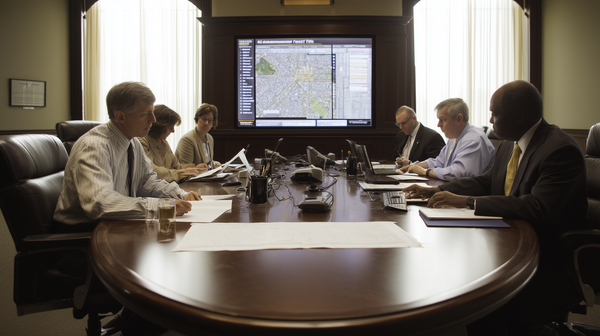
In July 2025, the California Independent System Operator and OATI launched a generative-AI pilot inside CAISO’s outage management system. CAISO’s chief information and technology officer framed the deployment in terms of “improving situational awareness and freeing up time for other important tasks” for operators. In the pilot, the operator remains the decision authority over every action the system recommends. What changes, where the system is in use, is what the operator does between recommendations: less time compiling situational awareness from raw data, more time interpreting AI-generated summaries and validating recommended actions. Similar operator-assist pilots are active at PJM and SPP. The pilots are pilots, not pervasive deployments, and the practical experience of most US dispatchers in 2026 still looks much closer to direct judgment than to supervisory judgment.
The control room cluster is where Jain’s operators do not vanish; they ascend characterization is most directly in tension with the role-level arrows below. Both halves of the tension are real. At the leading edge, the task content of the dispatcher’s day has begun to shift from direct judgment toward supervision of automated outputs, in the way Jain describes for the near term, with the operator retaining final authority over every action the system recommends. Most dispatchers have not yet seen this shift. The matrix’s downward role-level arrow does not contradict that. It locates the same trajectory on a longer clock. The supervisory operator is a smaller workforce than the directly-judging operator was, even when each individual operator is doing more cognitively demanding work than before. Stage two of the four-stage mechanism produces both effects at once. The certification framework (the NERC System Operator Certification Program) that credentialed the directly-judging operator does not yet describe the supervisory operator’s actual work, and that gap is the institutional pressure that eventually carries the cluster into stage three.
A second pattern in this cluster runs in the opposite direction. Distribution system operators working with advanced distribution management systems (ADMS) and distributed energy resource management systems (DERMS) are a role being created rather than displaced. Distribution-level operations have not historically required real-time dispatch judgment at the scale that transmission has; the proliferation of distributed solar, behind-the-meter storage, and electric vehicle charging is creating the workload that the role exists to handle. AI handles the combinatorial complexity that humans cannot manage at scale. The role grows because the system it operates is growing.
How AI Reshapes Dispatch, Market, ADMS, and SCADA Control-Room Work
In utility control rooms, AI changes the tempo of work before it changes the accountability structure. Real-time operators, reliability coordinators, traders, ADMS operators, and SCADA technicians increasingly supervise, validate, and challenge machine-generated recommendations, while certified human judgment remains the institutional backstop.
| Role | Current Tasks | Employment | R/S/O | Dominant AI System | Task-Content Shift | Role Direction | Horizon |
|---|---|---|---|---|---|---|---|
| Power dispatcher / balancing authority operator 51-8012 | Monitor real-time frequency and tie-line flows; issue switching orders; adjust generation dispatch to maintain balance; respond to contingency events with the reliability coordinator. | 5,000 | R/S | Forecasting and planning; grid optimization; generative-AI operator assist; AI-enhanced EMS with real-time contingency analysis; reinforcement-learning dispatch optimization. | Direct real-time dispatch judgment moves toward supervision of AI-recommended actions. Operators build situational awareness from AI-generated summaries as leading deployments move into assisted-operation modes. | ↓ | Medium |
| Reliability coordinator NERC-certified institutional role | Maintain wide-area situational awareness across multiple balancing authorities; issue reliability directives; coordinate emergency response; oversee transmission-loading relief procedures. | ~500–1,000 nationally Not in NAICS 221100; concentrated at ISOs/RTOs and a small number of large multi-balancing-authority utilities. | R/S | Outage prediction; grid optimization; AI-enhanced contingency screening; real-time security-constrained dispatch with ML overlays; generative situational summarization for cross-region coordination. | Event-by-event judgment moves toward supervisory oversight of AI-recommended actions across larger footprints. NERC RC certification remains the institutional defense. | ↔ | Medium-long |
| Energy market trader / scheduling coordinator 13-2099 / 13-2051 subset | Submit day-ahead and real-time energy bids; manage congestion through financial transmission rights; monitor ISO market dashboards; reconcile settlements. | Not separable in OEWS A large share sits at power-marketing affiliates and trading houses outside NAICS 221100. | R | Forecasting and planning; ML-driven price and congestion forecasting; LLM-assisted regulatory filing review; algorithmic bid optimization. | First-pass forecasting and bid construction increasingly become model-generated. The trader’s value shifts toward challenging model assumptions on edge cases and managing counterparty relationships. | ↓↓ | Near-medium |
| Distribution system operator / ADMS operator Emerging role | Operate ADMS for feeder switching, fault location, isolation, and restoration; supervise DERMS-aggregated dispatch; respond to grid-edge events with automated topology reconfiguration. | ~500–1,500 Subset of 5,000 power distributors and dispatchers in NAICS 221100; ADMS-specific count is still emerging. | R | Grid optimization and DER coordination; outage prediction; AI-augmented ADMS with predictive feeder modeling; DERMS for aggregated DER dispatch; FLISR automation; real-time topology estimation. | Dispatch responsibility expands to encompass DER coordination and dynamic feeder reconfiguration. AI handles combinatorial complexity that humans cannot manage at scale. | ↑ | Near-medium |
| SCADA analyst / EMS technician 17-3023 subset | Maintain SCADA and EMS point databases; troubleshoot communication outages between substations and control centers; support alarm-response engineering and OT cybersecurity. | ~2,000–3,000 Subset of 6,020 electrical and electronic engineering technologists in NAICS 221100. | R/O | Asset monitoring; grid optimization; AI-enhanced anomaly detection in SCADA telemetry; automated alarm filtering and prioritization; ML-based point-quality screening. | AI triages and prioritizes alarms before the technician sees them. The technician investigates flagged anomalies and manages the rapidly growing universe of sensors feeding SCADA. | ↔ | Medium |
R/S/O indicates the role’s dominant exposure: routine, safety-critical, or operationally constrained work. Arrows indicate directional pressure on the role, not a deterministic employment forecast. In this cluster, AI compresses forecasting, contingency screening, alarm triage, and bid construction, while certified operators and technical specialists remain accountable for reliability-critical decisions.
Engineering and Planning
OEWS does not distinguish protection engineers from planning engineers from interconnection engineers from general electrical engineers. All sit under Standard Occupational Classification codes 17-2071 (Electrical Engineers) and 17-2072 (Electronics Engineers), and the 20,330 electrical engineers BLS counts in NAICS 221100 in May 2025 is a single bucket. The cluster below subdivides the bucket using utility staffing pattern conventions and trade association estimates, with each row identified as an approximation.
Protection engineering is a safety function rather than a reliability function. Protective relays coordinate fault interruption across the transmission and distribution system, and the settings that govern that coordination exist to prevent equipment damage and personnel hazard during electrical disturbances. The institutional architecture around the role reflects that: NERC PRC reliability standards specify minimum performance requirements, professional engineering liability follows the engineer’s signature on the coordination study, and the standards themselves take years to revise. AI applied to relay setting optimization is a research frontier (Pacific Northwest National Laboratory and other national laboratories and academic groups have published on machine-learning approaches to protective relays), but utility deployment remains limited. Where these tools reach production use, the shift in the work will follow the Jain progression directly: protection engineers validate adaptive settings rather than recalculating them. Headcount in the role holds, on a horizon governed by the same institutional logic that holds nuclear operators in place. The engineer signs the settings, and the signature carries professional engineering liability that no AI vendor will assume.
Planning engineering is a reliability function. Planners produce the studies that demonstrate the grid will remain stable under contingencies, but they do not sign off on operating decisions in real time, and their institutional protection is correspondingly thinner than the protection engineer’s. At utilities that have adopted AI-assisted scenario generation, ML-driven load and resource forecast automation, and LLM-assisted regulatory filing drafting layered on top of conventional tools like PSS/E and PowerWorld, transmission planning studies that previously took weeks of manual scenario setup are compressing to days or less. Most utility planning departments have not adopted these tools at scale. Where adoption proceeds, the planner becomes, in Jain’s framing, a curator of models that evolve continuously rather than an author of studies frozen in time. Regulatory sign-off on the resulting plans, and the liability-bearing engineering review that produces it, remain human work. The role itself contracts over the next five to fifteen years as per-study labor intensity falls and study production capacity becomes less of a binding constraint on the planning function.
Power electronics and energy storage engineering are growing roles. Inverter-based resource deployment, grid-forming inverter development, and utility-scale battery integration require engineering capacity that did not exist at scale a decade ago. AI runs control scheme simulations in minutes instead of days, letting engineers explore design alternatives that were previously impractical. The engineer’s value-add shifts from running the simulations to verifying that AI-generated control schemes meet grid-code requirements and translating the technical findings into market and regulatory documents. Role-level headcount grows; per-MW labor intensity falls.
How AI Reshapes Grid Engineering, Planning, Interconnection, and Permitting Work
In the engineering and planning layer of the power sector, AI compresses modeling, scenario generation, document drafting, and first-pass analysis. The human role does not disappear so much as migrate toward validation, liability-bearing judgment, stakeholder negotiation, and interpretation of increasingly complex machine-generated results.
| Role | Current Tasks | Employment | R/S/O | Dominant AI System | Task-Content Shift | Role Direction | Horizon |
|---|---|---|---|---|---|---|---|
| Protection engineer 17-2071 subset | Set protective relay coordination studies; review fault data and post-event analysis; specify relay hardware; validate settings against NERC PRC standards. | Subset of 20,330 electrical engineers Protection-specific count is not separable in NAICS 221100. | R/S | Outage prediction; physics-informed ML for relay-setting optimization; AI-assisted post-event fault analysis. | Settings recalculation compresses. Engineers validate adaptive settings generated by physics-informed models; physical inspection and liability-bearing review remain human. | ↔ | Long |
| Power systems planning engineer 17-2071 / 17-2072 | Conduct annual transmission planning studies, including N-1 and N-2 contingencies; perform generation interconnection impact studies; prepare load forecasts for integrated resource plans; support FERC Form 715 filings. | Subset of ~20,550 engineers Planning-specific count is not separable in NAICS 221100. | R | Forecasting and planning; ML-driven load and resource-forecast automation; AI-assisted production-cost modeling in PSS/E and PowerWorld; LLM-assisted regulatory filing drafting. | Study workflows compress. Planners become curators of model outputs and validators of scenarios, while regulatory sign-off and liability-bearing review remain human. | ↓ | Medium |
| Transmission interconnection engineer 17-2071 / 17-2072 | Perform interconnection impact studies for generation and load additions; conduct power-flow, contingency, and stability analyses; submit data into ISO/RTO study processes. | Subset of ~20,550 engineers Additional headcount sits at ISOs/RTOs and engineering consultancies outside NAICS 221100. | R | Forecasting and planning; grid optimization; AI-assisted load-flow, transient-stability, and EMT analyses; cluster-study automation; LLM-assisted study-report drafting. | Engineers shift from study execution to validation of automated results, scoping of cluster studies, and interpretation of system impacts. | ↓ | Near task / Medium role |
| Power electronics / grid modernization engineer 17-2072 | Specify inverter and converter control architectures; conduct grid-forming inverter studies; support HVDC and FACTS commissioning; develop technical standards for IBR interconnection. | ~1,000–2,000 utility-side estimate Small in NAICS 221100; most power-electronics engineering sits at OEM manufacturers in NAICS 335. | R | Grid optimization and DER coordination; ML-assisted inverter-control design; AI-driven HVDC/FACTS operation studies; physics-informed ML for grid-forming inverter analysis. | Simulation-heavy work compresses. Engineers become curators of model libraries and validators of AI-generated control schemes. | ↑ | Medium |
| Energy storage engineer 17-2072 / emerging | Design battery storage systems for utility and market participation; develop dispatch and value-stacking strategies; analyze battery degradation and warranties; perform siting and sizing studies. | ~500–1,500 Not separately coded in OEWS; emerging role across NAICS 221100. | R | Forecasting and planning; grid optimization; ML-driven battery dispatch optimization; degradation models; value-stacking optimization; AI-assisted siting and sizing. | Optimization computations become heavily AI-driven. Engineers focus on model validation, financial value-stack analysis, and regulatory compliance for storage market participation. | ↑ | Medium |
| Reliability and resource adequacy analyst Institutional; ISOs/RTOs | Conduct stochastic loss-of-load expectation studies; determine reserve-margin requirements; perform capacity-expansion modeling; participate in FERC and state proceedings on resource adequacy. | ~300–600 across seven ISOs/RTOs Not in NAICS 221100; subset of roughly 6,400 ISO/RTO headcount. | R | Forecasting and planning; stochastic production-cost modeling; capacity-expansion modeling; ML-assisted scenario generation; probabilistic resource-adequacy assessments. | Model-run volume expands. Analysts become designers of scenarios and validators of results rather than the primary source of computational labor. | ↔ | Medium |
| Environmental and permitting engineer 17-2081 / 19-2041 | Prepare environmental impact assessments and permit applications; coordinate with agencies on NEPA and state-equivalent reviews; conduct site characterization and stakeholder engagement; monitor compliance. | Several thousand cross-NAICS Not separately coded in NAICS 221100; many environmental engineers and scientists sit in NAICS 541620 under contract to utilities. | R | Forecasting and planning; LLMs for NEPA and state-permitting document drafting; AI-assisted regulatory compliance analysis; satellite imagery for environmental impact assessment. | Permit-application drafting compresses under LLM assistance. Environmental review judgment, agency negotiation, and public engagement remain human. | ↔ | Medium |
R/S/O indicates the role’s dominant exposure: routine, safety-critical, or operationally constrained work. Arrows indicate directional pressure on the role, not a deterministic employment forecast. In this cluster, AI reduces the labor intensity of modeling, study execution, drafting, and scenario generation, while increasing the premium on engineering judgment, certification, interpretation, and accountability.
Customer-Facing and Back Office
A Gartner survey of 321 customer service and support leaders conducted in October 2025 found that 20 percent had already reduced agent staffing due to AI. The survey was cross-industry; utility-specific compression has not been independently documented at the same precision, and utility customer service operations have historically lagged commercial sectors in adopting automation at the customer interface. The mechanism is the same. First-line inbound call handling for outage reporting, billing disputes, and rate structure questions is the substitutable task content, and LLM-based chatbots and outage self-service portals are the substituting technology. The CSR who remains handles exceptions: the calls the AI cannot resolve, the customers it loses, the regulatory complaints that escalate from the first two.
That is the clearest near-term candidate for the same complete substitution that has already played out for the meter reader. Two other roles in the cluster run in the opposite direction.
Cybersecurity is the cluster’s growth story. AI-driven security operations center monitoring, ML-based anomaly detection in operational technology and information technology traffic, and LLM-assisted threat intelligence synthesis compress the alert triage workload. At the same time, the AI-enabled attack surface is expanding. AI-driven phishing, deepfakes, and automated reconnaissance create threat volume that the analyst role exists to address. CIP compliance work persists regardless of AI deployment levels. Headcount grows.
Data analytics is the back-office counter-trend. Routine reporting and dashboard creation increasingly self-service through AI-assisted tools. The analyst shifts toward data-pipeline architecture, model validation, and business-question framing, and utility headcount in the role grows as the AI deployment surface expands across the rest of the organization.
The cluster’s nuanced case is the rate case economist. First-draft testimony, data-request responses, and commission-order analysis are high-LLM-exposure tasks. At firms that have adopted LLM-assisted drafting and analysis, the economist’s role is shifting toward reviewing AI-generated drafts and standing behind the analysis on cross-examination, rather than writing the drafts from scratch. But the credentialing value of cross-examination testimony and the liability exposure in rate case filings sustain the human role. Not a role the large language model eliminates. A role whose work the large language model substantially prefabricates.
How AI Reshapes Customer, Regulatory, Analytics, and Cyber Utility Work
The strongest near-term AI pressure falls on high-volume, text-heavy, and rules-based utility functions: customer service, billing, regulatory drafting, reporting, and first-pass analysis. At the same time, cyber and advanced analytics roles become more valuable as AI expands both operational capability and attack surface.
| Role | Current Tasks | Employment | R/S/O | Dominant AI System | Task-Content Shift | Role Direction | Horizon |
|---|---|---|---|---|---|---|---|
| Customer service representative 43-4051 | Handle inbound calls for outage reporting and billing disputes; arrange payments; answer rate-structure questions; escalate complex cases to regulatory specialists. | 18,580 | O | Large-load integration; forecasting and planning; LLM-based chatbots for first-line handling; AI-assisted billing dispute resolution; outage self-service portals. | First-line inbound call volume is the primary LLM substitution target. Customer service representatives increasingly handle exception escalations the AI cannot resolve. | ↓↓ | Near |
| Demand response / DSM program manager 11-9199 subset | Design and manage demand-side management and energy-efficiency programs; coordinate cost-recovery filings; oversee measurement and verification; manage implementer contracts. | Subset of 4,280 managers DSM, EE, and DR counts are not separable in NAICS 221100; a large parallel workforce sits at program implementer firms. | R | Forecasting and planning; large-load integration; AI-driven customer segmentation; ML-based M&V; generative AI for outreach drafting; predictive analytics for opt-in and persistence. | Marketing drafting, M&V analysis, and routine reporting carry high LLM exposure. Program design judgment and regulatory commission engagement remain human-centered. | ↑ | Medium |
| Rate case economist / regulatory analyst 13-2051 / 19-3011 subset | Prepare cost-of-service studies for rate cases; draft testimony on rate design and cost allocation; analyze commission orders for compliance; respond to data requests. | Very small Subset of financial and investment analysts, 1,840 in NAICS 221100, and economists, roughly 150 in NAICS 221100. | R | Forecasting and planning; LLMs for filing drafting and data-request response; AI-assisted commission-order analysis; automated cost-of-service model execution. | First-draft testimony, data-request responses, and commission-order analysis carry high LLM exposure. The economist shifts toward expert validation of AI-generated analysis, while cross-examination, credentialing, and liability sustain the role. | ↓ | Near-medium |
| Billing and metering analyst 43-3031 subset | Reconcile AMI meter data with billing records; investigate billing exceptions and disputes; audit rate-class assignments; calculate net-metering and time-of-use bills. | Subset of 2,710 clerks Billing-specific subset is not separable from bookkeeping, accounting, and auditing clerks in NAICS 221100. | O | Asset monitoring; AMI-fed billing automation; ML-based billing exception detection; LLM-assisted dispute resolution. | Routine billing-exception triage substantially automates. Analysts handle complex multi-jurisdictional cases and large-customer issues requiring human judgment. | ↓↓ | Near |
| Data analyst / business intelligence analyst 15-2051 | Build reporting dashboards for operations, finance, and regulatory functions; perform ad hoc AMI, SCADA, and customer-data analysis; support business-unit decisions with quantitative analysis. | 1,060 | O | Forecasting and planning; AutoML for utility-specific dashboards; LLM-based SQL generation; AI-assisted data-quality monitoring. | Routine reporting and dashboard creation increasingly become self-service through AI tools. Analysts shift toward data-pipeline architecture, model validation, and business-question framing. | ↑ | Medium |
| Cybersecurity analyst 15-1212 | Monitor OT and IT environments for intrusion and anomaly; collect CIP compliance evidence and prepare for audits; investigate alerts; lead incident response; assess vulnerabilities and coordinate OT patching. | 1,150 | R/O | Outage prediction; AI-driven SOC monitoring; ML-based anomaly detection in OT/IT traffic; LLM-assisted threat-intelligence synthesis; automated incident-response playbooks. | Alert triage and threat-intelligence synthesis compress. Analysts shift toward threat hunting and CIP compliance work, while the AI-enabled attack surface expands. | ↑↑ | Near-medium |
R/S/O indicates the role’s dominant exposure: routine, safety-critical, or operationally constrained work. Arrows indicate directional pressure on the role, not a deterministic employment forecast. In this cluster, AI substitutes most directly for high-volume administrative and first-pass analytical work, while increasing the value of cyber, data architecture, and expert judgment.
Project Developers and Interconnection
In March 2025, FERC Commissioner David Rosner wrote to the seven independent system operators and regional transmission organizations urging adoption of automation in interconnection study processes. The letter cited a specific result: a Midcontinent ISO automation tool called SUGAR had reproduced a two-year manual cluster study in ten days. Similar tools are emerging at Southwest Power Pool (the GridUnity platform) and at developer technical teams; an Amazon Web Services multi-agent architecture for connection impact assessment was published in November 2025, and a Grid-Mind system using LLM orchestration for sequential power flow, contingency, transient stability, and electromagnetic transient analyses is under peer review at IEEE Transactions on Smart Grid.
This is the most dramatically compressed task content in the matrix. It is not a future scenario. It is current production deployment at one of the seven major US wholesale market operators. And it is not yet producing a corresponding role-level contraction in the interconnection queue analyst role, because the FERC Order 2023 cluster study reform expanded the volume of studies the analysts perform faster than the per-study automation reduces the labor each one requires. National interconnection queue backlogs sit above 2,000 gigawatts as of the most recent Lawrence Berkeley National Laboratory Queued Up report. The analyst headcount holds for the next two to five years while the queue is large, then contracts over the five-to-fifteen-year window as automation reaches the per-study tasks faster than new studies enter the queue.
That gap between the task content and the role count is the task-versus-role distinction from Part 1 visible at its starkest. The task content of the interconnection queue analyst’s day is shifting now, in months, through deployment of tools that demonstrably work. The role count holds, in years, because the institutional pressure (queue volume, regulatory deadline) sustains it. When the queue clears, the role contracts.
Most of the development workforce around interconnection (originators, financiers, engineering consultants, project managers, EPC supervisors) sits in NAICS 237 (Specialty Trade Contractors) and NAICS 541 (Professional and Technical Services) depending on firm structure. None of it is counted in NAICS 221100, and there is no single dataset that cleanly represents the full developer universe across fuel types. The role headcount column in the table below uses qualitative direction arrows rather than estimated counts where the count is genuinely not knowable.
How AI Reshapes Project Development, Interconnection, and Commercial Contracting Work
In the project-development layer of the power sector, AI compresses siting analysis, queue studies, financial modeling, contract review, and compliance tracking. But the decisive work remains institutional: navigating interconnection queues, negotiating counterparties, managing stakeholder risk, and converting technical findings into financeable projects.
| Role | Current Tasks | Employment | R/S/O | Dominant AI System | Task-Content Shift | Role Direction | Horizon |
|---|---|---|---|---|---|---|---|
| Project developer / originator | Identify generation siting opportunities; negotiate land options and PPA structures; manage permitting and stakeholder engagement; develop financial models for investment committee review. | Not separable in OEWS Developer workforce typically appears in NAICS 237 or NAICS 541, depending on firm structure. | R | Large-load integration; forecasting and planning; LLMs for permit drafting; AI siting tools using GIS constraint mapping; ML-driven financial-model scenario analysis. | Siting analysis and financial modeling carry high LLM exposure. The originator’s value shifts toward relationship judgment, stakeholder strategy, and institutional queue navigation that AI does not replicate. | ↑ | Near-medium |
| Interconnection queue analyst / study engineer | Prepare and review interconnection impact studies, including power-flow, contingency, and stability analysis; track queue position and cluster-study schedules; manage FERC-compliant data submissions; coordinate with ISO/RTO study teams. | Very small Concentrated in ISOs/RTOs and developer technical teams; not separable in OEWS. | R | Forecasting and planning; grid optimization; AI-assisted cluster-study tools; automated connection-impact analysis; LLM-orchestrated study workflows; multi-agent architectures for interconnection analysis. | Compression is already operational. Study workflows that once took years can be reproduced far faster in AI-assisted environments. Analysts shift from conducting studies to scoping, validating, and interpreting automated outputs, while managing institutional queue processes AI cannot navigate. Queue volume sustains near-term headcount. |
↔ near term ↓ as tools mature |
Near task / Medium role |
| Power purchase agreement / contract manager 13-1041 subset | Negotiate and administer PPAs, EPC contracts, and interconnection agreements; manage milestone tracking and counterparty performance; coordinate with legal on disputes; analyze precedent contracts and market comparables. | Subset of 2,870 compliance officers Large additional workforce sits at developer firms and IPP affiliates outside NAICS 221100. | R | Forecasting and planning; large-load integration; LLMs for PPA and EPC contract drafting and review; AI-assisted negotiation comparables; automated contract-compliance tracking; NLP-based counterparty risk extraction. | First-draft contract language, standard-provision review, and routine compliance tracking compress under LLM assistance. Counterparty negotiation, legal sign-off, and dispute resolution remain human. | ↑ | Medium |
R/S/O indicates the role’s dominant exposure: routine, safety-critical, or operationally constrained work. Arrows indicate directional pressure on the role, not a deterministic employment forecast. In this cluster, AI accelerates the analytical and document-heavy parts of development, while the bottleneck shifts toward institutional judgment, queue navigation, stakeholder trust, negotiation, and accountability.
Federal Regulators, ISOs, RTOs, and State Commissions
In November 2024, PJM Interconnection terminated an internal XGBoost-based net-interchange forecasting project after struggling to maintain the ML staffing capacity required to keep the model in production. The project was technically functional. The constraint was institutional: PJM’s data science and ML engineering bench was not deep enough to sustain ongoing model maintenance, retraining, and validation alongside the queue of other work. PJM published the experience as a case study at the CIGRE 2024 conference. The episode is among the clearest documented examples of a particular dynamic that runs throughout this cluster: institutional defenses against AI’s role-level effects often hold not because the institution has explicitly defended them, but because the institution does not have the internal AI and machine learning capacity to deploy and sustain the systems that would otherwise erode the protected work content. The defense emerges from operational reality, not from intent.
The institutions that regulate the US electric power industry and operate its wholesale markets do as much to shape what AI deployment looks like inside utilities as the utilities themselves do. FERC, NERC, the seven ISOs and RTOs, and the fifty state public utility commissions employ technical staff who analyze utility filings, certify operators, audit reliability standards, monitor markets, and produce the orders and rules that govern utility AI investment. The binding constraint on AI deployment inside these institutions is appropriation and statutory mission, not technological readiness.
The role-level direction across the cluster is largely flat. Headcount at FERC has fluctuated with federal workforce policy and was reported at approximately 1,500 full-time employees in pre-2025 budget justifications, with subsequent estimates varying.[6] NERC operates with around 340 staff, supplemented by several hundred at the six regional entities under delegated authority. ISO and RTO headcount across the seven entities sums to roughly 6,400 from 990 filings and human resources reports.[7] State PUC technical staffing varies enormously across the fifty commissions, from large staffs at the California Public Utilities Commission, the New York Public Service Commission, and the Texas Public Utility Commission down to small commissions with handful-of-staff technical benches; rough national order of magnitude is 5,000–15,000 staff across all functions.
The emerging role in the cluster, the AI governance analyst, runs in the opposite direction. The PJM experience and analogous ones at other ISOs/RTOs and large utilities are producing internal teams charged with the model development, validation, MLOps, and governance work that the prior generation of operations and IT staff was not built to handle. The role count is small. It is growing fast.
How AI Reshapes Regulatory, Reliability, ISO/RTO, and AI-Governance Work
In the institutional layer of the power sector, AI compresses filing review, docket analysis, compliance evidence review, market monitoring, contingency screening, and report drafting. But the center of gravity remains human: statutory authority, commissioner discretion, enforcement judgment, NERC certification, market-rule interpretation, and AI governance.
| Role | Current Tasks | Employment | R/S/O | Dominant AI System | Task-Content Shift | Role Direction | Horizon |
|---|---|---|---|---|---|---|---|
| FERC technical analyst / attorney-adviser 23-1011 / 15-2051 / 13-2099 subsets; institutional | Analyze utility and ISO/RTO filings for FERC rule compliance; draft commissioner memoranda and proposed orders; conduct economic and engineering analyses for rulemaking; manage formal dockets and intervenor correspondence. | ~1,500 FTE Based on pre-2025 budget justifications; current count is uncertain following federal workforce changes. | R | Forecasting and planning; LLMs for filing analysis; NLP-based intervention drafting; AI-assisted Form 1 and EQR analytics; retrieval-augmented generation over docket archives. | Filing review and order drafting compress. Legal judgment, commissioner-level decision-making, and rulemaking discretion remain human; the binding constraint is appropriation, not capability. | ↔ | Medium-long |
| NERC compliance analyst / CIP auditor Institutional | Conduct Critical Infrastructure Protection reliability-standard audits at registered entities; review compliance evidence; investigate potential violations; prepare compliance monitoring and enforcement reports. | ~300–500 CIP-specific audit positions NERC has roughly 340 staff; six regional entities add several hundred additional staff. | R/S | Asset monitoring; LLMs for evidence review and audit-report drafting; AI-assisted anomaly detection in registered-entity submissions; NLP-based reliability-standard interpretation. | Evidence review and compliance documentation carry high LLM exposure. Audit judgment and enforcement findings still require human sign-off under NERC statutory authority. | ↔ | Medium-long |
| ISO/RTO market monitor / market analyst | Analyze real-time and day-ahead market results for competitive concerns; produce quarterly State of the Market reports; investigate participant behavior; develop rule-change proposals for market design. | ~200–400 across seven ISOs/RTOs Subset of roughly 6,400 ISO/RTO total headcount; function-specific counts are not consistently separable. | R | Forecasting and planning; ML-based market-behavior anomaly detection; NLP-based regulatory document analysis; AI-assisted data compilation for quarterly reports. | First-pass screening for market manipulation compresses. Market monitors shift toward judgment on ambiguous cases and formal regulatory proceedings requiring documented human analysis. | ↔ | Medium |
| ISO/RTO operations analyst / real-time operator Institutional | Operate real-time energy and ancillary-services markets; supervise security-constrained economic dispatch; conduct contingency analysis and reliability operations across the footprint; coordinate outage scheduling with member transmission owners. | ~2,000–3,000 Operations and control-center subset across the seven ISOs/RTOs; part of roughly 6,400 total ISO/RTO headcount. | R/S | Outage prediction; grid optimization; AI-enhanced security-constrained economic dispatch; real-time contingency analysis with ML acceleration; generative-AI operator-assist tools. | The trajectory mirrors utility-side dispatch, but on the wholesale-market timescale. AI handles first-pass screening and recommendation; operators retain final dispatch authority under NERC reliability standards and ISO/RTO tariffs. | ↓ | Medium |
| State PUC technical staff / rate analyst Institutional | Review utility rate-case filings; conduct discovery; draft interventions on cost-of-service, rate design, and resource planning; advise commissioners on technical issues; manage formal hearing records. | ~5,000–15,000 total staff Highly heterogeneous across fifty commissions; estimate spans technical, legal, and administrative functions. | R | Forecasting and planning; LLMs for utility-filing analysis; AI-assisted intervention drafting and discovery review; retrieval-augmented generation over commission orders and tariffs; automated comparables analysis for rate cases. | Filing review and discovery work compress. Commission deliberation, public-hearing engagement, and order drafting remain human; smaller PUCs are particularly exposed. | ↓ | Medium |
| ISO/RTO data scientist / AI governance analyst Emerging | Develop and validate ML models for ISO/RTO operational and market functions; manage MLOps pipelines and model monitoring; oversee third-party AI deployments in market and operational systems; coordinate cross-functional AI governance. | ~50–200 Small but growing across the seven ISOs/RTOs and a handful of large utilities. | R/O | Forecasting and planning; grid optimization; internal AI model development; validation frameworks; MLOps; third-party AI governance. | This role is being created rather than disrupted. The supervisory function becomes formalized inside institutions where AI capability, reliability accountability, and governance must meet. | ↑↑ | Near |
R/S/O indicates the role’s dominant exposure: routine, safety-critical, or operationally constrained work. Arrows indicate directional pressure on the role, not a deterministic employment forecast. In this cluster, AI accelerates institutional analysis but also creates a new governance layer: model validation, auditability, reliability accountability, and human authority over machine-generated recommendations.
What Patterns Hold Across the Matrix
Three patterns run across the forty-row inventory.
The first is that the reliability-safety axis from Part 1 explains more of the variation in role-level outcomes than any other single variable. Reliability roles (dispatchers, market analysts, billing analysts, customer service representatives, rate case economists, regulatory filing analysts) face headcount contraction over the next two to fifteen years. Safety roles (nuclear reactor operators, line installers, substation and relay repairers, protection engineers) face flat or slow-contracting headcount over fifteen-year-and-longer timeframes. The same machine learning techniques drive task-content compression in both categories, but the institutional architecture surrounding the safety roles is harder to attenuate, and the four-stage mechanism therefore plays out on two timetables at once.
The second pattern is the task-versus-role distinction from Part 1 visible at full scale. Task content is shifting in every cluster over the next two to five years, including in roles whose headcount is growing. Wind technicians and solar technicians are growth roles whose daily work content is changing substantially. Interconnection queue analysts are roles whose headcount holds in the near term while their study workflows have already been compressed by two orders of magnitude in production deployment. Cybersecurity analysts are growth roles whose alert triage workload has compressed under AI tooling at the same time their threat environment has expanded. None of these patterns shows up in occupational employment data, because occupational employment data counts roles, not what the people in them do.
The third is the shape of the role-level growth in the matrix. Most rows show flat or contracting headcount. A small but consistent set shows growth: cybersecurity, data analytics, power electronics, energy storage engineering, distribution system operations, and the emerging AI governance analyst role at ISOs/RTOs and large utilities. These are not roles where AI replaces other roles. They are roles created or expanded by AI deployment itself: positions that exist to handle the AI-enabled attack surface, to manage the deployment surface across the rest of the utility, to design the inverter-based generation that AI helps integrate, or to keep the ML models the utility increasingly depends on in production. The PJM XGBoost retirement is the cautionary version of the same finding: a utility cannot deploy AI without the workforce to sustain it. The matrix shows the shape of that workforce coming into existence: small today, growing fast, and concentrated in the institutions with the deepest internal engineering benches.
For utilities. Workforce planning that extrapolates from the current org chart will miss in both directions. The roles utilities will need more of (cybersecurity analysts, data scientists, power electronics and energy storage engineers, distribution system operators, AI governance staff) require talent the utility industry has not historically competed for, on compensation bands that mostly don’t exist inside utility salary structures. The roles utilities will need fewer of (customer service representatives, billing analysts, market traders, dispatchers in the long run, rate case economists) are filled by workers whose retraining is not automatic and whose union representation often is. A workforce plan that does not engage both halves of that rebalance, and does not engage the unions on the contracting side from the start, ends up short on the talent it needs and unable to release the talent it does not.
For regulators. The certification and licensing frameworks that protect safety-critical roles (NERC System Operator Certification, NRC operator licensing, state union contracts around line work and dispatch) hold against role-level headcount change in the near and medium terms. They hold less well against the gradual erosion of the work content the frameworks were originally written to certify. The competencies the frameworks codify describe a directly-judging operator. The work being done day-to-day at the leading control rooms is already moving toward something else. The certifying authorities can revise the frameworks to describe the work that is now being done, or they can wait until the gap between credential and practice becomes too large to ignore. Both paths end at the same place. The second one ends there with more disruption.
For investors and capital allocators. AI’s productivity effect on utilities is concentrated in coordination-layer functions (dispatch, planning, market operations, customer service, regulatory filing) and in the institutional infrastructure surrounding the industry (interconnection studies, market monitoring, compliance, technical review). It is less concentrated in the physical-infrastructure operations and maintenance functions where utility capex tends to focus. Utility-AI investment narratives that emphasize physical infrastructure deployment and vendor relationships will miss most of the productivity story. The utilities and ISOs/RTOs with the internal AI and ML engineering capacity to deploy and sustain these systems will capture more of the gain than those pursuing AI primarily through vendor procurement.
Part 4 takes up the capability-creation half of the AI and robotics story: the new activities utilities will be able to perform for the first time, drawing on Hannah Kaplan’s From Reactive Reliability to Dynamic Intelligence. Part 5 returns to strategy, with specific recommendations for utilities, ISOs and RTOs, regulators, capital allocators, and the workforce itself, and engages directly with the productivity claims in current consultancy framings of AI in utilities.
The translation from AI capability to utility workforce change runs through institutional defenses that hollow out from within rather than break from outside. Task content inside roles shifts first and most visibly. Role-level headcount follows on longer timelines that differ systematically between reliability and safety functions. The decade ahead looks slow until it does not.
Notes
[1] BLS Occupational Employment and Wage Statistics, SOC 43-5041 (Meter Readers, Utilities) in NAICS 221100 (Electric Power Generation, Transmission and Distribution): May 2006, 10,510; May 2016, 6,230; May 2023, 3,910; May 2025, 3,320.
[2] Title XIII of the Energy Independence and Security Act of 2007 established the federal Smart Grid policy framework. The American Recovery and Reinvestment Act of 2009 authorized Smart Grid Investment Grants. PG&E’s SmartMeter program began in 2006 with California Public Utilities Commission approval expanded in 2009; the program installed approximately nine million meters by 2012. AMI penetration figures from EIA Form EIA-861: 23 percent of US electricity customers in 2011, 47 percent in 2016, 68 percent in 2021, 72 percent in 2022.
[3] Cluster 6 (project developers and interconnection) draws on NAICS 237 (specialty trade contractors) and NAICS 541 (professional and technical services) where developer firms sit. Cluster 7 (federal regulators, ISOs/RTOs, state commissions) uses IRS Form 990 filings, official ISO and RTO human resources reports, and FERC and NERC budget justifications, because federal and state government employment is coded outside NAICS 221100 and ISOs and RTOs are not consistently coded anywhere in OEWS. OEWS groups protection engineers, planning engineers, interconnection engineers, and general electrical engineers under SOC codes 17-2071 and 17-2072 without further subdivision; estimates within those codes are approximations, identified as such in the relevant rows.
[4] The six clusters: forecasting and planning; outage prediction and reliability support; wildfire mitigation and vegetation management; asset monitoring and predictive maintenance; grid optimization and DER coordination; large-load integration and data center flexibility.
[5] US Energy and Employment Report 2025 (DOE, August 2025). Of the 933,800 workers counted in electric power generation across all NAICS codes: 32.5 percent in Construction, 22.0 percent in Professional and Business Services, 20.3 percent in Utilities itself.
[6] FERC budget justifications pre-2025 cited approximately 1,500 full-time employees. Third-party aggregators (including Prospeo and others) have reported lower estimates following 2025 federal workforce policy changes. The figure in the matrix is approximate and identified as such.
[7] ISO/RTO headcount from IRS Form 990 filings (most recent available): MISO 1,271; NYISO 714; ISO-NE 764; CAISO 788; SPP 889. ERCOT 960 from public HR reporting. PJM approximately 1,015 from third-party aggregators (PJM is structured as an LLC and does not file Form 990). NERC headcount approximately 340 from RocketReach (NERC does not file Form 990). Total approximately 6,400 across the seven entities.