- Google would pay the $10.8m extra cost of advanced conductors on 15.5 miles of a Columbus line Ohio Power already plans to rebuild, bringing 24 megawatts about two years early. The line stays the utility's.
- A California draft resolution would require Google to advance $600,000 per megawatt for a 250-megawatt San Jose load and limit refunds to revenue actually collected. In Nova Scotia, EverWind accepted interruptible service and responsibility for incremental system costs.
- Advanced conductors can roughly double a short line's capacity, but terminal equipment, stability limits and generation shortfalls cap what a better wire delivers.
- Commissions should check the incremental cost independently, keep customer money out of the utility's return, pace refunds to real revenue and make the terms public.
Google has offered to pay for a better wire. On November 19 the company and Ohio Power, the American Electric Power utility formerly branded AEP Ohio, asked the Public Utilities Commission of Ohio to approve a deal under which Google would fund the $10.8m extra cost of fitting advanced, higher-capacity conductors to 15.5 miles of aging transmission line in Columbus that the utility already planned to rebuild.1 The upgrade would let 24 megawatts that Google has already contracted for arrive about two years early. Once a planned 765-kilovolt buildout in central Ohio is finished, the companies expect the corridor to carry more than 700 megawatts of additional capacity for growing demand. The project still needs the commission and the Ohio Power Siting Board, and the target in-service date is late 2028.1
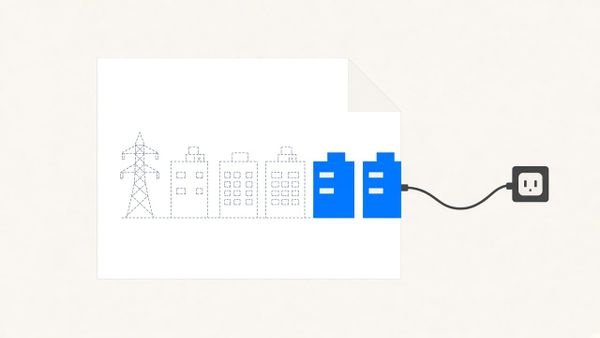
At $10.8m the sum is small by data-center standards, but the structure matters more than the size. Large electricity users have spent two years waiting in queues for the grid to come to them. Increasingly they are being asked, or are offering, to pay for the specific upgrades that let them connect sooner. That moves the hard questions from engineering to accounting: who owns an asset a customer paid for, and what happens to everyone else's bills if the load never arrives.
Ohio is not alone
In California the instrument is a capital advance. Pacific Gas and Electric has asked the California Public Utilities Commission to approve an agreement to serve a 250-megawatt Google data center in San Jose at 230 kilovolts. The draft resolution on the commission's November 19 agenda would approve it only with an additional refundable advance of $600,000 per megawatt, about $150m at full load, and would limit annual refunds to the net revenue PG&E actually collects from Google.2 Its reasoning is specific. The site will connect to Newark-NRS, a new 230-kilovolt line whose revenue requirement of about $100m a year in its early years falls on customers across the California ISO system, and it depends on more than ten other transmission upgrades in the South Bay. Without a larger advance, the draft says, other customers carry stranded-cost risk even if Google never claims a refund.2 PG&E and Google had already revised their agreement in October to add a $150m advance, after the commission held the item repeatedly from July.34
Nova Scotia's version relies on interruptibility. EverWind Fuels, which plans an $8bn (Canadian) data-center campus at Point Tupper, signed a service contract under which Nova Scotia Power can direct the first phase to drop its demand on ten minutes' notice. A separate letter agreement makes EverWind responsible for the incremental costs to other customers "reasonably attributable" to its load while it takes service on an interim tariff. An early estimate puts the needed system upgrades at C$74m or more, and the provincial energy board will decide how those costs are tracked and paid.5
Federal proposals lean instead on long contracts backed by collateral. Answering the Federal Energy Regulatory Commission's large-load show-cause orders, transmission owners in PJM proposed that a data center commit to pay for at least 80 percent of the transmission service it requests for ten years or more, with a guarantee starting at 25 percent of the obligation and rising to the full amount by the start of service. MISO proposed contracts of up to 20 years.6 Several grid operators also proposed non-firm service that would let a large load draw power before the upgrades needed for firm service are finished.7
Paying for an asset someone else owns
The Ohio structure splits the cost sensibly. Google pays only the difference between a conventional rebuild and an advanced one. The line remains Ohio Power's, and the companies say it will cut line losses and slightly reduce the transmission costs other customers pay.1 The rebuild the utility had already planned is a system cost that customers were going to bear anyway. The increment exists because one customer wants capacity sooner, so that customer should carry it.
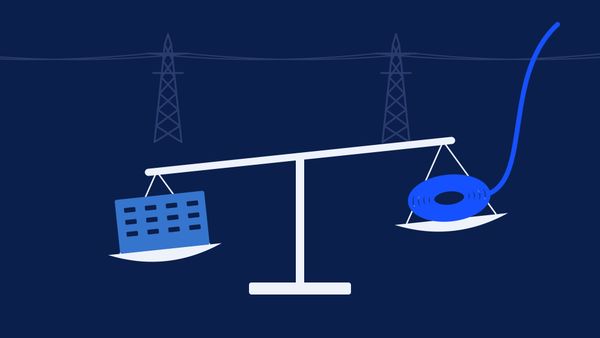
The harder questions are about accounting. A customer's contribution should be netted out of rate base, so the utility earns no return on money it did not put up. If the contribution is refundable, the refund schedule decides who holds the risk. Refunds paced to net revenue actually received, which is what California's draft requires, leave the customer exposed until its load proves out; refunds based on projected revenue push that risk back onto everyone else.2 And when an upgrade frees spare capacity, as Ohio's is expected to after the 765-kilovolt lines arrive, the agreement should say whether the funding customer has any claim on it. The public summary of the Ohio filing does not.1 A priority right to 700 megawatts bought for $10.8m would be a very different deal.
The cheapest megawatts, and where they stop
Advanced conductors and other grid-enhancing technologies are usually the quickest megawatts a buyer can fund. A composite-core conductor strung on existing towers can roughly double a line's capacity for lines of up to about 50 miles, which covers 98 percent of American transmission segments, according to a 2024 study in the Proceedings of the National Academy of Sciences.8 Dynamic line ratings, which set a line's limit by actual weather rather than conservative assumptions, add something like 10 to 30 percent in the Department of Energy's estimate. Advanced conductors cost two to four times as much as conventional wire, which is why a rebuild already on the books is the natural moment for a customer to pay the difference.9
They do not help everywhere. A bigger wire achieves little if the transformers, breakers and buses at each end cannot carry the extra current, and upgrading that terminal equipment adds cost and time.89 Longer lines tend to be limited by voltage and stability rather than heat.8 No amount of transmission makes up for a shortage of generation either. Where resource adequacy is the binding constraint, a better wire delivers the load to a system that still cannot serve it at peak. The first diligence question for any customer-funded upgrade is which limit actually binds.
How the instruments compare
| Instrument | Recent example | Buyer carries | Other customers carry | Terms to price |
|---|---|---|---|---|
| Paying the increment on a planned upgrade | Google and Ohio Power | The extra cost of the better equipment, whether or not its own load grows | The base project they were already paying for | Rate-base treatment of the contribution; rights to any capacity freed |
| Refundable capital advance | PG&E and Google (draft) | Cash tied up until net revenue earns it back | Stranded cost if the advance is small relative to network upgrades | Size of advance; pace of refunds |
| Minimum bill with collateral | PJM transmission owners' proposal | At least 80 percent of contracted service for ten years or more | Credit risk if collateral lapses or a guarantor fails | Term; minimum share; form and step-up of collateral |
| Interruptible or non-firm service | EverWind; federal non-firm proposals | Curtailment, and the on-site backup to ride through it | Little, provided curtailment is enforced | Notice period; curtailment triggers; path to firm service |
Sources: Google; California Public Utilities Commission; CBC News; Latitude Media; POWER; AIxEnergy analysis
The instruments work best in combination. Interruptible service can bridge the years before an upgrade is finished, while an advance or a minimum bill with collateral protects the system if the load arrives smaller than promised.
What commissions should require
A commission asked to approve a customer-funded upgrade should want the incremental cost calculated against the project the utility would have built anyway, and checked by someone other than the parties. It should keep the customer's money out of the return the utility earns and pace any refunds to revenue actually received. It should require the agreement to say who gets capacity the upgrade frees up, and on what terms. And it should publish enough of the economics for the next customer to know the price. California's draft declined a request to make the commercial terms of the Google agreement public.2 Deals approved one at a time under seal make cost shifting hard to spot.
Before the pitch
For a hyperscaler's energy team, a proposal to a utility is stronger when it arrives with the utility's own plans in hand. Start with the capital plan and local transmission planning filings to find upgrades already scheduled near the site, since paying the increment on a planned project is far easier to approve than funding a new one. Work out with the utility's planners whether the binding limit is thermal, terminal equipment, stability or generation before proposing a fix. Offer to take interruptible or non-firm service until the upgrade is finished, with on-site backup sized to the notice period. Propose the contribution as outside rate base, or refundable only against net revenue, and be explicit about what the company wants in return: an earlier service date written into the contract, without a claim on the rest of the corridor. Bring credit support a commission will recognize, such as a parent guarantee or a letter of credit sized to any minimum bill, and expect the agreement to be public.
For what large-load tariffs already charge to hold capacity, see What a Megawatt Really Costs to Reserve.
Notes
- Google and Ohio Power Company, "Google and Ohio Power Company Announce New Initiative to Unlock New Capacity with Advanced Transmission Technology," press release, November 19, 2026, https://www.googlecloudpresscorner.com/2026-11-19-Google-and-Ohio-Power-Company-Announce-New-Initiative-to-Unlock-New-Capacity-with-Advanced-Transmission-Technology. The release gives the $10.8 million incremental cost, 15.5 miles of line, 24 MW about two years early, more than 700 MW of additional corridor capacity after the planned 765 kV buildout, and a late-2028 in-service target pending approval by the Public Utilities Commission of Ohio and the Ohio Power Siting Board. It does not address rights to the additional corridor capacity. The commission case number had not been located at the time of writing.↩︎
- California Public Utilities Commission, Energy Division, Draft Resolution E-5455, "Pacific Gas and Electric. Electric Rules 2, 15, and 16 Exceptional Case Submittal for Electric Transmission Interconnection for Google LLC," Agenda ID 24254, November 19, 2026, https://docs.cpuc.ca.gov/PublishedDocs/Published/G000/M627/K943/627943892.PDF. The draft requires an additional refundable capital advance of $600,000 per MW and limits annual refunds to 100 percent of annual net revenues received from the customer, plus an adjustment for the Income Tax Component of Contribution. It states that the Newark-NRS 230 kV line, with about 1,000 MW of capacity, has a revenue requirement capped at $102 million in year one, declining to $41 million in year forty, and that the load depends on more than ten other significant South Bay transmission upgrades. It also dismisses a protest seeking public disclosure of the agreement's confidential commercial terms. The $150 million figure in the text is $600,000 multiplied by 250 MW. The commission's published agenda for November 19 summarizes the item somewhat differently, as requiring "special treatment of costs associated with broader transmission network upgrades, determined through a Tier 2 Advice Letter." The outcome of the November 19 vote had not been published at the time of writing.↩︎
- California Regulatory Intelligence, "Thursday Briefing: Google's $150M Data Center Agreement; CPUC Delays; Gas Curtailment Rules," October 29, 2026, https://www.calregulatory.com/thursday-briefing-googles-150m-data-center-agreement-cpuc-delays-gas-curtailment-rules/.↩︎
- Oscar Waterman, "CPUC Postpones Vote on Google Data Center Yet Again," California Energy Markets, November 3, 2026, https://www.newsdata.com/california_energy_markets/regulation_status/cpuc-postpones-vote-on-google-data-center-yet-again/article_0771dfd9-1682-45de-a3c6-7cf257b56000.html, reporting the October 29 hold as the fifth consecutive hold on the item since July.↩︎
- Taryn Grant, "Data Centre's Signed Deal with Nova Scotia Power Ties New System Costs to EverWind," CBC News, November 13, 2026, https://www.cbc.ca/news/canada/nova-scotia/data-centres-signed-deal-with-nova-scotia-power-ties-new-system-costs-to-proponent-9.7419518. Dollar figures are Canadian. The interruptible provision allows the utility, or the system operator once it takes control, to direct EverWind to turn off its demand with 10 minutes' notice; cost tracking and payment are subject to approval by the Nova Scotia Energy Board.↩︎
- Nick Zenkin, "Utilities Want FERC to Lock Data Centers into Paying for Grid Upgrades," Latitude Media, November 18, 2026, https://www.latitudemedia.com/news/utilities-want-ferc-to-lock-data-centers-into-paying-for-grid-upgrades/. The proposals are pending; FERC has not acted on them.↩︎
- Sonal C. Patel, "Five Grid Operators Respond to FERC with Distinct Plans for Large-Load Integration," POWER, November 19, 2026, https://www.powermag.com/five-grid-operators-respond-to-ferc-with-distinct-plans-for-large-load-integration/.↩︎
- Emilia Chojkiewicz, Umed Paliwal, Nikit Abhyankar, Casey Baker, Ric O'Connell, Duncan Callaway, and Amol Phadke, "Accelerating Transmission Capacity Expansion by Using Advanced Conductors in Existing Right-of-Way," Proceedings of the National Academy of Sciences 121, no. 40 (2024): e2411207121, https://doi.org/10.1073/pnas.2411207121. The doubling applies with voltage support as needed; the authors note that terminal equipment such as transformers and protection may need upgrading, and that lines longer than about 50 miles are likely constrained by voltage drop or stability limits.↩︎
- U.S. Department of Energy, "Pathways to Commercial Liftoff: Innovative Grid Deployment," webinar presentation, December 2023, https://www.energy.gov/sites/default/files/2023-12/Grid%20Liftoff%20Webinar%20Final.pdf, citing roughly 10 to 30 percent or more added effective capacity from dynamic line ratings, roughly two to four times higher capital cost for advanced conductors than conventional ACSR or ACSS conductors, and possible additional costs for associated equipment such as substation upgrades.↩︎
Bibliography
- California Public Utilities Commission, Energy Division. Draft Resolution E-5455, "Pacific Gas and Electric. Electric Rules 2, 15, and 16 Exceptional Case Submittal for Electric Transmission Interconnection for Google LLC." Agenda ID 24254. November 19, 2026. https://docs.cpuc.ca.gov/PublishedDocs/Published/G000/M627/K943/627943892.PDF.
- California Regulatory Intelligence. "Thursday Briefing: Google's $150M Data Center Agreement; CPUC Delays; Gas Curtailment Rules." October 29, 2026. https://www.calregulatory.com/thursday-briefing-googles-150m-data-center-agreement-cpuc-delays-gas-curtailment-rules/.
- Chojkiewicz, Emilia, Umed Paliwal, Nikit Abhyankar, Casey Baker, Ric O'Connell, Duncan Callaway, and Amol Phadke. "Accelerating Transmission Capacity Expansion by Using Advanced Conductors in Existing Right-of-Way." Proceedings of the National Academy of Sciences 121, no. 40 (2024): e2411207121. https://doi.org/10.1073/pnas.2411207121.
- Google and Ohio Power Company. "Google and Ohio Power Company Announce New Initiative to Unlock New Capacity with Advanced Transmission Technology." Press release, November 19, 2026. https://www.googlecloudpresscorner.com/2026-11-19-Google-and-Ohio-Power-Company-Announce-New-Initiative-to-Unlock-New-Capacity-with-Advanced-Transmission-Technology.
- Grant, Taryn. "Data Centre's Signed Deal with Nova Scotia Power Ties New System Costs to EverWind." CBC News, November 13, 2026. https://www.cbc.ca/news/canada/nova-scotia/data-centres-signed-deal-with-nova-scotia-power-ties-new-system-costs-to-proponent-9.7419518.
- Patel, Sonal C. "Five Grid Operators Respond to FERC with Distinct Plans for Large-Load Integration." POWER, November 19, 2026. https://www.powermag.com/five-grid-operators-respond-to-ferc-with-distinct-plans-for-large-load-integration/.
- U.S. Department of Energy. "Pathways to Commercial Liftoff: Innovative Grid Deployment." Webinar presentation, December 2023. https://www.energy.gov/sites/default/files/2023-12/Grid%20Liftoff%20Webinar%20Final.pdf.
- Waterman, Oscar. "CPUC Postpones Vote on Google Data Center Yet Again." California Energy Markets, November 3, 2026. https://www.newsdata.com/california_energy_markets/regulation_status/cpuc-postpones-vote-on-google-data-center-yet-again/article_0771dfd9-1682-45de-a3c6-7cf257b56000.html.
- Zenkin, Nick. "Utilities Want FERC to Lock Data Centers into Paying for Grid Upgrades." Latitude Media, November 18, 2026. https://www.latitudemedia.com/news/utilities-want-ferc-to-lock-data-centers-into-paying-for-grid-upgrades/.