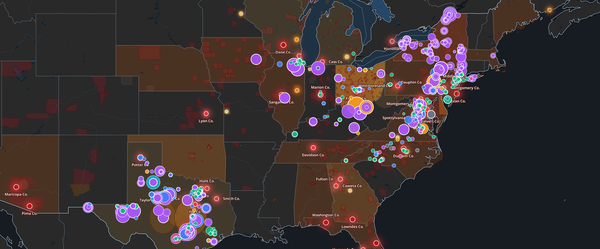
The movement is no longer confined to a handful of high-profile fights in Northern Virginia or Phoenix. Since late 2025, cities, counties, and states have adopted, proposed, extended, or debated pauses on data center development from Seattle and Spokane to Charlotte, Denver, Monterey Park, DeKalb County, Boone County, McMinnville, Harlingen, and New York.

The timing is not accidental. On June 22, Reuters reported that mayors from forty cities, including London, Melbourne, and Phoenix, had joined the Global Urban Data Centres Pact, an effort to reduce data center pressure on power systems, water resources, and host communities. Earlier in June, Reuters reported that U.S. electricity consumption is expected to reach record highs in 2026 and 2027, driven in part by artificial-intelligence data centers and broader electrification. That same month, Reuters reported that United Nations researchers expect data centers to double their power and water consumption by 2030.¹
The moratorium has become the first visible sign of a larger institutional adjustment. Data centers are no longer being treated only as real estate projects, technology investments, or local tax-base opportunities. They are being treated as large infrastructure loads with consequences for substations, transmission planning, water systems, utility rates, clean-energy procurement, and public trust.
Charlotte’s City Council approved a 150-day data center moratorium on June 8, 2026, saying the pause would give officials time to study energy and water use, environmental effects, noise, aesthetics, and zoning rules. Seattle enacted a one-year moratorium on new artificial-intelligence data centers after officials and advocates raised concerns about power demand, land use, and public value.² Those local actions are part of a broader national pattern.
Local Data Center Moratoriums and Restrictions
| State | Local jurisdiction | Status |
|---|---|---|
| California | Monterey Park | 45-day moratorium enacted; later extended through Jan. 21, 2027; voters approved permanent ban. |
| California | Oakley | 45-day moratorium enacted, extendable up to two years. |
| California | Coachella | Project terminated; 45-day moratorium imposed; permanent ban under consideration. |
| California | Indio | 45-day moratorium approved June 3, 2026. |
| Colorado | Denver | One-year moratorium approved. |
| Georgia | DeKalb County | Moratorium extended 100 days through Sept. 30, 2026. |
| Georgia | Bulloch County | Moratorium reported; extended from 90 to 210 days. |
| Georgia | Atlanta, Palmetto, Fayetteville | Reported prohibitions or bans on data centers. |
| Illinois | Lake County | Eight-month temporary moratorium in unincorporated areas. |
| Illinois | Morgan County | Six-month moratorium approved. |
| Indiana | Boone County | One-year moratorium approved for unincorporated areas. |
| Indiana | Madison County | Short-term moratorium passed. |
| Indiana | Miami County | Moratorium adopted May 4, 2026. |
| Indiana | Multiple counties | Local groups say roughly a dozen counties have issued moratoria; individual list still needs verification. |
| Michigan | Green Charter Township | One-year moratorium enacted Dec. 9, 2025. |
| Michigan | Huron County | Planning Commission advanced three-year moratorium proposal. |
| Missouri | Jackson County | Extension of data center moratorium advanced to 180 days. |
| Missouri | Bolivar | Six-month moratorium reported; needs non-Facebook confirmation. |
| Missouri | Edgerton | Moratorium denied. Track as rejected, not enacted. |
| New Jersey | Andover Township | Officials announced plan to ban all data centers. |
| New Jersey | Statewide advocacy | More than 60 groups asked governor for moratorium on data centers of 20 MW or larger. |
| New York | Lysander | Six-month moratorium approved May 7, 2026. |
| New York | Perth | One-year moratorium passed June 4, 2025. |
| New York | St. Lawrence County | Moratorium not passed; resolution urged municipalities to consider moratoria. |
| North Carolina | Chatham County | One-year moratorium approved Feb. 11, 2026. |
| North Carolina | Orange County | One-year moratorium approved. |
| North Carolina | Charlotte | 150-day moratorium approved. |
| North Carolina | Apex | One-year pause considered or adopted in reporting; verify final ordinance. |
| North Carolina | Durham | Reported among local governments with moratoria; verify final ordinance. |
| North Carolina | Hillsborough | Reported moratorium or planning pause. |
| North Carolina | Boiling Spring Lakes | One-year moratorium reported. |
| Tennessee | McMinnville | Moratorium passed June 9, 2026. |
| Tennessee | Coffee County | Moratorium passed June 9, 2026. |
| Tennessee | Nashville | Moratorium or restrictions advanced on first reading; still moving through process. |
| Tennessee | Gallatin | Moratorium vote deferred. |
| Tennessee | Knox County | Moratorium proposed through June 30, 2027. |
| Texas | Harlingen | 120-day moratorium approved. |
| Washington | Seattle | One-year moratorium enacted. |
| Washington | Spokane | Yearlong moratorium approved. |
| Washington | Snohomish County | Temporary moratorium reported; needs county-source confirmation. |
State-Level Data Center Moratorium Proposals and Actions
| State | Jurisdiction | Status |
|---|---|---|
| Georgia | Statewide | HB 1059 proposed moratorium / impact-assessment framework. |
| Maine | Statewide | Moratorium passed legislature; vetoed by governor. |
| Maryland | Statewide | Moratorium bill introduced. |
| Michigan | Statewide | Moratorium bills introduced. |
| Minnesota | Statewide | Moratorium bill introduced for large data centers pending Public Utilities Commission report. |
| New Hampshire | Statewide | One-year moratorium bill introduced. |
| New York | Statewide | Legislature passed data center moratorium bill; awaiting governor as of June 8, 2026. |
| Oklahoma | Statewide | Moratorium proposed for data centers over 100 MW. |
| Pennsylvania | Statewide | Senate co-sponsorship memo for statewide moratorium. |
| South Carolina | Statewide | Moratorium bill introduced pending oversight framework. |
| South Dakota | Statewide | Moratorium bill introduced for hyperscale data centers. |
| Vermont | Statewide | Moratorium / impact-study bill introduced through 2030. |
| Virginia | Statewide | Temporary data-center moratorium proposal reported in House. |
| Wisconsin | Statewide | Bill introduced to prohibit operation until conditions are met. |
The state-level measures differ in design. Some would halt construction or permitting. Others would require impact studies, utility commission review, or new regulatory frameworks before projects could proceed. Maine passed what the Associated Press described as the nation’s first state-level data center moratorium before Governor Janet Mills vetoed it, citing the absence of a carveout for a planned project in Jay. New York’s Legislature passed a one-year moratorium bill for large data centers, while Virginia lawmakers considered a temporary restriction tied to interconnection constraints.³
The local measures are more immediate. They usually give planners several months to write zoning rules, examine community impacts, or decide where data centers should be allowed.
The common denominator is uncertainty. A large data center can require new substations, transmission upgrades, water infrastructure, backup generation, road improvements, and noise mitigation. Local governments are asking whether existing zoning codes are adequate. Utilities are asking how to plan for large loads that may or may not materialize. Regulators are asking who should pay for infrastructure if a project is delayed, downsized, or canceled. Communities are asking whether the tax benefits justify the pressure on land, water, power systems, and quality of life.
The issue is sharper because artificial intelligence has changed the scale of demand. The International Energy Agency estimated in April 2026 that global data center electricity consumption could roughly double by 2030. Reuters reported in June that U.S. power use is expected to hit record highs in 2026 and 2027, with AI-focused data centers contributing to the increase.⁴
For developers, the spread of moratoriums creates permitting uncertainty. For communities, the pauses are a way to avoid making irreversible infrastructure decisions under incomplete rules. For utilities, they reflect a planning system being asked to absorb industrial-scale demand at digital speed.
The next phase is likely to move from emergency pauses to formal standards. Those standards may include large-load tariffs, financial security requirements, phased energization, water reporting, clean-energy deliverability rules, flexible-load commitments, community-benefit agreements, and clearer zoning categories for data center campuses.
Whether these temporary moratoriums evolve into permanent restrictions or comprehensive regulatory frameworks remains uncertain. What is clear is that local governments, utilities, regulators, and legislatures are increasingly treating hyperscale data centers not simply as commercial development projects, but as critical infrastructure whose effects extend well beyond the property line.
Notes
- Reuters, “City Mayors from London to Melbourne Seek to Curb Data Centre Burden on Power, Water,” June 22, 2026; Reuters, “US Power Use to Beat Record Highs in 2026 and 2027 as AI Use Surges, EIA Says,” June 9, 2026; Reuters, “AI to Double Data Centre Power and Water Consumption by 2030, UN Researchers Say,” June 3, 2026.
- Axios Charlotte, “City of Charlotte Bans New Data Center Construction for 150 Days,” June 9, 2026; City of Charlotte, “Frequently Asked Questions: Data Centers & Moratorium,” June 8, 2026; The Guardian, “Seattle Enacts Year-Long Ban on New AI Datacenters,” June 9, 2026.
- Associated Press, “Maine Governor Vetoes Nation’s First Moratorium on Data Centers,” April 24, 2026; New York State Senate, “NY State Senator Kristen Gonzalez Passes Data Center Moratorium Bill,” June 5, 2026; Data Center Dynamics, “Virginia House of Delegates May Consider Temporary Data Center Moratorium,” February 3, 2026.
- International Energy Agency, “Key Questions on Energy and AI,” April 16, 2026; Reuters, “US Power Use to Beat Record Highs in 2026 and 2027 as AI Use Surges, EIA Says,” June 9, 2026.
Bibliography
Associated Press. “Maine Governor Vetoes Nation’s First Moratorium on Data Centers.” April 24, 2026.
Axios. “Water Joins Energy as Top AI Flashpoint.” June 25, 2026.
Axios Charlotte. “City of Charlotte Bans New Data Center Construction for 150 Days.” June 9, 2026.
C40 Cities. “Mayors from Around the World Unite in Call for Sustainable Urban Data Centres.” June 23, 2026.
City of Charlotte. “Frequently Asked Questions: Data Centers & Moratorium.” June 8, 2026.
Data Center Dynamics. “Virginia House of Delegates May Consider Temporary Data Center Moratorium.” February 3, 2026.
International Energy Agency. “Key Questions on Energy and AI.” April 16, 2026.
MultiState. “State Data Center Legislation in 2026 Tackles Energy and Tax Issues.” February 20, 2026.
New York State Senate. “NY State Senator Kristen Gonzalez Passes Data Center Moratorium Bill.” June 5, 2026.
Reuters. “AI to Double Data Centre Power and Water Consumption by 2030, UN Researchers Say.” June 3, 2026.
Reuters. “City Mayors from London to Melbourne Seek to Curb Data Centre Burden on Power, Water.” June 22, 2026.
Reuters. “EU Proposes Energy Standards for Data Centers.” June 4, 2026.
Reuters. “US Power Use to Beat Record Highs in 2026 and 2027 as AI Use Surges, EIA Says.” June 9, 2026.
Rockefeller Institute of Government. “Updates on the Cloud: More Moratoriums on Data Centers.” June 10, 2026.
The Guardian. “Seattle Enacts Year-Long Ban on New AI Datacenters.” June 9, 2026.